
Finding affordable flights for a family of four can be tricky, but it’s not impossible. Here’s what you need to know:
- Biggest Challenges: Airlines often increase prices for group bookings, school break travel is expensive, and hidden fees like baggage charges can add up fast.
- Key Strategies:
- Search for tickets individually to avoid price hikes.
- Book flights during the ideal windows: 34–86 days before for domestic and 3–5 months for international.
- Use tools like Google Flights and Hopper to track prices.
- Consider nearby airports or alternate routes for better deals.
- Leverage credit card points and family-friendly airline policies to cut costs.
- Timing Tips: Flying midweek or during “shoulder seasons” (just before or after peak times) can save you hundreds.
- Avoid Extra Costs: Check baggage policies and take advantage of airlines like Southwest, which offer free checked bags.

How Airline Pricing Works for Families
How Airlines Price Multiple Tickets
Airlines organize seats into pricing tiers, with each tier offering a set number of seats at a specific fare. When you search for multiple tickets – say, four at once – the system checks if enough seats are available in the same price tier. If only two seats remain in the cheaper tier, the system automatically bumps all four tickets to the higher-priced tier. This means you’ll pay the higher fare for every ticket, even though only two seats were unavailable at the lower price. Essentially, airlines’ revenue systems penalize group bookings by increasing fares for all tickets in the search. Families often end up paying 7% to 10% more per ticket compared to solo travelers booking the same flight.
Adding to the challenge, airlines now use continuous pricing models. These systems adjust fares incrementally, making it nearly impossible to pinpoint the perfect time to book.
How to Search for Tickets Strategically
To avoid overpaying, start by searching for one ticket at a time. Then check prices for two tickets, and finally for the full group. This approach reveals price jumps and helps you identify when fares increase. If booking all tickets together raises the price, try the 2+2 method – book two tickets per reservation to secure the lower fare.
Here’s a real-world example: In 2024, a family of four searching for flights from Chicago to Orlando received a group quote of $1,920. By splitting into two separate bookings, with one adult and one child per reservation, they snagged the same seats on the same flight for $1,590, saving $330.
For families with children under 13, airlines are required to seat kids next to an adult without charging extra on domestic flights. This means you may not need to pay upfront for seat assignments. Once you’ve found the best fares, managing separate bookings becomes essential to keeping your savings intact.
How to Manage Multiple Bookings
While splitting bookings can save money, it does add some logistical hurdles. Each reservation will have its own confirmation number, and if one flight is delayed, airlines aren’t required to rebook passengers on separate reservations. To stay organized, keep track of all confirmation numbers, passenger details, and seat assignments in one shared document or spreadsheet.
After booking, select seats immediately to ensure everyone sits together. For international flights, monitor the seating chart as your departure date nears. If the plane starts filling up, it’s better to pay for seat assignments then rather than risk last-minute chaos at the gate.
And here’s a bonus tip: If you find a cheaper fare shortly after booking, the U.S. DOT 24-hour rule allows you to cancel and rebook within 24 hours without any penalty.

When and How to Book Family Flights
Best Booking Windows for Domestic and International Flights
Booking flights at the right time can make a big difference, especially when you’re buying tickets for the entire family. For domestic flights, the ideal booking window is 34 to 86 days before departure, which can save you around 25% compared to booking too early or too late. For international trips, start keeping an eye on fares 7 to 8 months ahead, with the best deals typically appearing 3 to 5 months before departure.
| Travel Period | Start Monitoring | Best Booking Window |
|---|---|---|
| Standard Domestic | 3–4 months out | 34–86 days (42 days optimal) |
| Standard International | 7–8 months out | 3–5 months (varies by region) |
| Spring Break | 2–3 months out | 28–61 days (43 days average) |
| Summer Travel | January/February | 2–3 months before departure |
| Thanksgiving | September | ~35 days before (24–59 day range) |
| Christmas/New Year | Mid-October | ~51 days before (32–73 day range) |
Flying during the shoulder season – just before or after school breaks – can also help lower costs. For example, departing on June 1 instead of mid-June could cut airfare by as much as 50%. Similarly, August flights tend to be 29% cheaper than December, saving an average of $120 per ticket. For a family of four, that’s a savings of nearly $500.
In 2026, Friday has become the most budget-friendly day to book and fly, with savings of up to 8% compared to Sunday departures.
If timing alone doesn’t yield the savings you need, consider alternative routes and airports to stretch your travel budget further.
Using Alternate Routes and Airports to Save Money
When ticket prices at your primary airport seem steep, looking at nearby airports within a 1–2 hour drive can pay off. Many metro areas have multiple airports, and the fare differences can be surprising. For instance, in early 2026, a family flying to Italy saved $1,500 by departing from Dulles (IAD) instead of JFK and choosing British Airways over other airlines.
Being flexible with your final destination can also help. Flying into a nearby city and taking a short train or bus ride to your intended location can unlock more affordable options.
Don’t overlook smaller costs like baggage fees, which can add up quickly for families. Understanding these fees ahead of time can help you avoid surprises.
How to Cut Baggage Costs When Traveling with Kids
Baggage fees are an easy way for travel expenses to spiral out of control, especially for families. While basic economy fares may seem like a bargain, they often don’t include checked or carry-on luggage, leading to unexpected charges.
Even small per-person fees can quickly add up, so it’s worth carefully reviewing baggage policies when comparing fares. A little planning here can go a long way in keeping your family travel budget intact.

Tools and Alerts That Help Families Find Flight Deals
Once you’ve nailed down booking strategies, the next step is tapping into digital tools to keep track of and snag the best fares for your family.
How to Use Flight Search Engines Effectively
Flight search tools vary in how they work, so understanding their features can help you save money. Google Flights is a great place to start. Its price calendar makes it easy to spot the cheapest travel dates at a glance, and you can search up to seven departure or arrival airports at once. For families, the “Exclude Basic Economy” filter – introduced in late 2025 – is a game changer. It eliminates fares that don’t include checked bags or seat selection, giving you a more accurate idea of what four tickets will actually cost.
After checking Google Flights, head over to Momondo for additional discounts offered by travel agencies. Then, confirm the final fare directly on the airline’s website for peace of mind.
For timing your purchase, Hopper is a powerful tool. Its AI predicts the best time to book, and the Price Freeze feature lets you lock in a fare for a fee between $5 and $20.
Finally, set up price alerts to track fare drops automatically.
How Price Alerts Save Time and Money
Price alerts are a lifesaver for busy parents who can’t monitor fares daily. These alerts track specific routes and notify you when prices drop, saving you both time and money. This is particularly useful when airfare prices in the U.S. have surged – rising 20.7% year-over-year as of May 2026.
Kayak is a standout for this. Its Price Forecast tool helps you decide when to book, and the Hacker Fares feature lets you combine one-way tickets to lower costs. For a family of four, even small savings per ticket can quickly add up.
How Dollar Flight Club Can Help Families Save on Flights
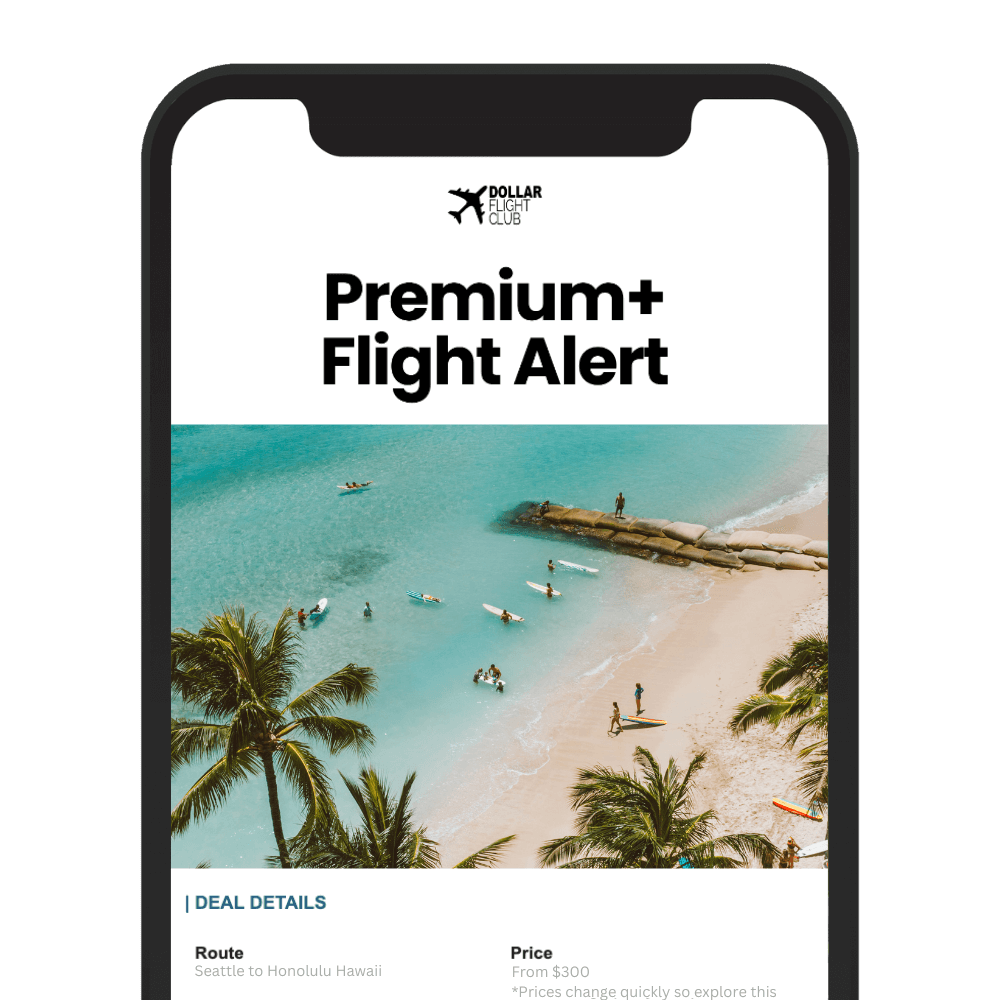
If you want to take the hunt for deals a step further, platforms like Dollar Flight Club are worth exploring. Unlike traditional search engines, this service brings discounted fares directly to you via email or SMS alerts. Some deals offer up to 90% off domestic and international flights.
The free plan covers one departure airport and includes domestic economy deals. For $69/year, the Premium plan expands to four departure airports, international routes, and mistake fares. At $99/year, the Premium+ plan adds SMS alerts and business class deals. For families with flexible travel dates, this approach allows you to plan trips around unbeatable fares that might otherwise be out of reach.

How to Use Points and Miles for Family Travel
Using points and miles can dramatically cut down on family travel costs, especially for airfare. But when you’re booking for a family of four, the math shifts. A deal that costs 25,000 miles per seat quickly adds up to 100,000 miles for everyone, making it more about maximizing the value of your points rather than chasing individual discounts.
How to Earn Points Through Everyday Spending
The quickest way to build a large points balance is by focusing on flexible rewards programs rather than airline-specific miles. Programs like Chase Ultimate Rewards and Amex Membership Rewards let you transfer points to multiple airline partners, giving you more options when it comes to booking flights. Airline-specific miles, on the other hand, tie you to one carrier, which can limit your flexibility when trying to find four seats on the same flight.
Here’s a smart tip for families: partners can refer each other for new credit card accounts. This way, you can earn both sign-up bonuses and referral bonuses, effectively doubling your earning rate without spending extra. Another strategy is to set up loyalty accounts for every family member, including kids, and link them through programs that allow family pooling. This ensures that no points go to waste, even if your children accumulate smaller balances.
Once you’ve built up a healthy points stash, the next challenge is figuring out how to redeem them efficiently for your entire family.
How to Redeem Points for Four Travelers
The biggest challenge for families is finding enough award seats. Airlines only release a limited number of discounted “saver” seats per flight, and searching for four seats at once can sometimes show no availability – even if two or three seats are still available at the lower rate.
To get around this, start by searching for one traveler to confirm the lowest available price. Then, book saver seats in smaller groups. For example, if only two saver seats are available, use points for those and pay cash for the other tickets. This strategy helps keep everyone on the same flight without overspending on miles.
Timing is also crucial. Book 330 to 355 days in advance, as airlines release award inventory during this window. This is when you’re most likely to find four saver seats on the same flight.
How to Get the Most Value from Your Points
To stretch your points further, focus on economy redemptions when traveling as a family. While business class seats might sound appealing, they are much harder to find for four travelers and require significantly more points. Economy tickets allow you to get more people in the air with fewer miles.
Certain programs offer family-friendly perks that can make a big difference. For instance:
- Air France/KLM Flying Blue gives a 25% discount on award tickets for children aged 2–11. A family of four flying from the U.S. to Europe could pay as few as 87,500 miles each way instead of 100,000.
- Air Canada Aeroplan charges just 2,500 points (or $25 CAD) to add a lap infant to any award booking, no matter where you’re flying.
Don’t forget to factor in taxes and fees before finalizing your redemption. Some international airlines impose hefty fuel surcharges that can cost hundreds of dollars per ticket, eroding your savings. For domestic flights, American Airlines is a great option, charging as little as $5.60 in taxes and fees on award flights since they don’t pass on fuel surcharges for most of their routes.
Finally, confirm the availability of four award seats before transferring points to an airline partner. Transfers are irreversible, so double-checking can save you from costly mistakes.

Which Airlines and Routes Offer the Best Value for Families
Airlines with Family-Friendly Fares and Policies
When it comes to family travel, Southwest Airlines stands out for domestic trips. Its policy of allowing two free checked bags per person can save a family of four up to $320 on a round-trip flight compared to airlines that charge for baggage. Another perk is the Companion Pass, which lets one designated traveler fly for just $5.60 in taxes on one-way domestic flights.
For international travel, Air France/KLM Flying Blue offers a 25% discount on award tickets for children aged 2–11, applicable across all cabin classes. Additionally, several U.S. airlines – Alaska, American, Frontier, Hawaiian, and JetBlue – guarantee adjacent seating for children aged 13 and under. United Airlines also uses a dynamic seat map system to ensure families with children under 12 are seated together, even on Basic Economy fares.
While airline policies can help reduce costs, understanding the broader pricing models of different airlines is also key.
Low-Cost vs. Full-Service Airlines for Families
Airlines vary widely in how they structure their fares, and this can significantly impact what families pay overall. Ultra-low-cost carriers (ULCCs) like Frontier and Spirit may advertise low base fares, but extra fees can quickly add up. For example, Spirit Airlines charges for seat assignments starting at $5 per person per segment. For a family of four needing assigned seats and checked luggage, the total cost on a ULCC can approach or even match that of a full-service airline.
On the other hand, full-service carriers like American Airlines and Alaska Airlines tend to provide more predictable pricing. Their policies guaranteeing family seating eliminate the need for additional fees to sit together. When deciding between ULCCs and full-service airlines, it’s important to compare the total cost, factoring in extras like seat assignments and baggage fees.
Nonstop vs. Connecting Flights: What Works Best for Families
How you structure your flight itinerary can also make or break a family trip. While connecting flights are typically 20% to 30% cheaper than nonstop options, they come with potential downsides – especially when traveling with young children. Delays, missed connections, or long layovers can add stress and diminish any cost savings.
A good rule of thumb is to divide the fare savings by the additional travel hours to see if the inconvenience is worth it. For shorter domestic trips, a single connection might be manageable. However, for international routes or long-haul flights with toddlers, the convenience of a nonstop flight often justifies the higher price, which can be 25% to 40% more than a connecting flight.

Key Takeaways for Finding Cheap Family Flights
Finding affordable flights for a family of four can feel like a puzzle, but a few smart strategies can make it manageable. Timing is everything – booking domestic flights 1–3 months in advance could save you up to 25%, and flying midweek might cut costs by as much as 20%. If you’re using miles, remember that award seats often open up 330 days before departure, so planning early can pay off.
Flexibility is another powerful tool. Tools like Google Flights let you use date grids to tweak your travel dates by a day or two, which could save your family hundreds of dollars. And don’t overlook baggage fees – Southwest Airlines’ policy of two free checked bags per person can save your family $240–$320 on a round trip compared to airlines that charge for luggage.
Rewards programs can also help trim costs. Family-friendly programs that let you pool points make it easier to hit redemption thresholds faster. When award availability is tight, consider mixed-cabin bookings. These allow you to combine points and miles strategies to keep everyone on the same flight while lowering the total cost in points.
Finally, stay on top of deals by signing up for alerts from services like Dollar Flight Club. Their emails and SMS notifications can tip you off to discounted fares – sometimes up to 90% off – so you’re not left scrambling at the last minute.
FAQs
Is it safe to split a family of four into two bookings?
Splitting a family of four into two separate bookings can sometimes help you save money, especially if the airline’s pricing pushes your group into higher fare brackets due to limited seat availability. To avoid complications, make sure at least one adult is paired with children in each booking to prevent any unaccompanied minor issues. Once you’ve made the bookings, reach out to the airline to link your confirmation numbers. This step helps ensure your group stays seated together and simplifies the process in case of rebookings or schedule changes.
What if only two cheap seats are left on the flight?
If there are only two seats available at the lowest price, booking all four tickets together will push the entire group into a higher fare bracket. To avoid this, book the two cheaper seats first, then purchase the other two at the higher price. Make sure an adult is paired with the children, and reach out to the airline to link the reservations, ensuring everyone can sit together.
How do I compare fares after baggage and seat fees?
When comparing airfare, it’s essential to consider the total trip cost – not just the base ticket price. Add in extras like baggage fees, seat selection, taxes, and booking fees. Budget airlines often seem cheaper at first glance but may charge more for these add-ons compared to full-service carriers.
Tools like Google Flights can help you compare fares, but make sure the prices include everything you need for your trip. If you know you’ll need extras, booking them in advance can save you from paying higher fees at the airport.