
Flying into smaller, secondary airports instead of major hubs can save you money on airfare, parking, and time spent navigating busy terminals. Here’s why:
- Lower Airfare: Secondary airports often host budget airlines like Frontier, offering cheaper flights. For example, a January 2026 flight from Burbank (BUR) to Las Vegas cost $76.99 compared to $128.84 from LAX – a 40% savings.
- Cheaper Parking: Parking fees at secondary airports range from $7–$12 per day, while larger airports charge $25–$40 daily.
- Shorter Security Lines: Average wait times are around 18 minutes at smaller airports versus 30 minutes at major hubs.
However, savings vary based on routes, dates, and added costs like ground transportation. If the total savings exceed $50–$75 per person, secondary airports are a smart choice. For international or complex itineraries, primary airports may still be better.
Pro Tip: Use tools like Google Flights or Dollar Flight Club to search multiple airports and find the best deals.

Common Airport Swaps in the US and Europe
US Secondary Airport Swaps
Travelers in the US can often save money by choosing smaller airports near major cities instead of the primary hubs. You can also find airline mistake fares to secure even deeper discounts. For instance, in the New York area, flying out of Long Island MacArthur (ISP) or Trenton-Mercer (TTN) can be $60–$100 cheaper than departing from JFK, Newark (EWR), or LaGuardia (LGA). Plus, parking at TTN costs about $10 per day, compared to as much as $75 per day at LaGuardia.
Chicago offers another good example with Midway (MDW). As a Southwest Airlines hub, MDW boasts a convenient 30-minute CTA train ride to downtown, making it nearly as accessible as O’Hare (ORD). On the East Coast, opting for Providence (PVD) instead of Boston Logan (BOS) for trips to Florida can save between $80 and $120 on airfare.
European Secondary Airport Swaps
In Europe, budget airlines often use smaller airports to keep costs down. For example, Ryanair and Wizz Air frequently operate from secondary airports to avoid the steep landing fees at major hubs. London’s Heathrow (LHR) has some of the highest landing fees globally, which is why a Ryanair flight from Stansted (STN) to Barcelona might cost just £22, compared to £55 from Gatwick (LGW). Notably, around 60% of flights from Stansted are operated by budget airlines.
In Milan, choosing Bergamo (BGY) over Malpensa (MXP) can save €15–€30 per ticket, with city transfers costing only €5–€6. Similarly, Paris Beauvais (BVA) serves as a Ryanair hub located 85 km from Paris. While coach transfers average about €17 each way, travelers need to weigh the extra travel time against potential fare savings.
Airport Swap Comparison Table
Here’s a quick overview of common airport swaps and the savings they offer:
| Metro Area | Primary Airport | Secondary Airport | Typical Savings | Notes |
|---|---|---|---|---|
| New York City | JFK, EWR, LGA | ISP, TTN, SWF | $40–$115+ | ISP fares are $60–$100 cheaper |
| Chicago | ORD | MDW | Varies | Southwest hub; 30-min CTA connection |
| Washington, D.C. | IAD | BWI | Up to 51% | Amtrak/MARC train to D.C. |
| San Francisco | SFO | OAK, SJC | Varies | OAK/SJC often better for West Coast |
| London | LHR, LGW | STN, LTN | £15–£30 (net) | STN is a key hub for Ryanair |
| Milan | MXP, LIN | BGY | €15–€30 | Transfer into the city costs ~€5–€6 |
| Paris | CDG, ORY | BVA | Varies | 90-min coach transfer required |

Factoring in Ground Transportation and Time
How to Calculate Your Total Trip Cost
Scoring a cheaper airfare doesn’t always mean you’re saving money. To figure out your real travel costs, you need to account for everything: round-trip airfare, baggage fees, airport parking, and ground transportation.
Take this example: a round-trip flight from Los Angeles. Flying out of LAX might run you $320, but if you’re parking for 7 days at around $30 per day, that’s an additional $210, bringing your total to $530. Meanwhile, a flight from Burbank (BUR) could cost $260, with parking fees closer to $84 for the week. That totals $354 – a savings of $176! However, for secondary airports to be worth it, your savings should ideally exceed $50–$75 per person after factoring in all associated costs. Keep in mind, both money and time play a role in determining whether switching airports is the smarter choice.
Time Trade-Offs to Keep in Mind
Saving time can be just as important as saving money. While shorter security lines are a clear advantage at smaller airports, don’t forget to check real-time traffic conditions. That secondary airport that looks like a 45-minute drive on the map could take you 90 minutes during rush hour. And when it comes to ground transportation, double-check availability at your arrival time. Late-night flights can mean limited options or surge pricing, which could cancel out any savings you expected.
Here’s a breakdown of the key differences between primary and secondary airports to help guide your decision:
Primary vs. Secondary Airport: Pros and Cons Table
| Factor | Primary Airport | Secondary Airport |
|---|---|---|
| Airfare | Higher on average | Often lower, especially with budget carriers |
| Parking costs | Higher fees (around $30/day) | Lower rates, typically $10–$12/day |
| Security wait time | ~30 minutes on average at large hubs | ~18 minutes on average at smaller hubs |
| Ground transportation | More options, including rail and bus | Fewer options, especially late at night |
| Crowding & navigation | Busier, more complex terminals | Smaller and easier to navigate |
| Flight frequency | More routes and airline choices | Fewer options; may require connections |
Ultimately, the best choice depends on your trip’s specific needs. To make an informed decision, compare all costs – money, time, and convenience – before booking.

How to Search for and Compare Secondary Airport Flights
How to Search All Airports for a City
Most booking platforms make it easy to search flights across multiple airports for a single city. You can use city codes like “NYC” to get results for all major New York-area airports, or codes like “LON” for London, “CHI” for Chicago, and “PAR” for Paris. This feature simplifies the process of comparing options in larger metro areas. Platforms like Google Flights let you take it a step further by entering up to seven airport codes separated by commas (e.g., “JFK, LGA, EWR”) to compare specific airports side by side. Similarly, KAYAK offers an “Include nearby airports” option, which expands your search radius to cover airports within 70–100 miles.
Keep in mind that some budget airlines, such as Southwest and Allegiant, often don’t show up on third-party booking sites. For these carriers, it’s worth visiting their official websites directly. Once you’ve cast a wide net, the next step is evaluating the total cost of your trip, including fees and other add-ons.
How to Compare Total Costs Across Options
Finding the cheapest airfare is just the beginning. To truly save money, you need to calculate the total cost of your trip. This includes not just the ticket price but also baggage fees, seat selection charges, parking, and ground transportation. For example, a flight that seems $80 cheaper might actually cost more once you factor in these extras.
To make an informed decision, identify all airports within a 30- to 90-minute drive of both your departure and destination points. Then, calculate the full cost for each option. Sometimes, the closest airport isn’t the most economical choice. As a general rule, secondary airports are worth considering if you can save at least $50–$75 per person after accounting for all additional costs. Paying attention to these details can help you stretch your travel budget further.
Using Dollar Flight Club to Find Deals
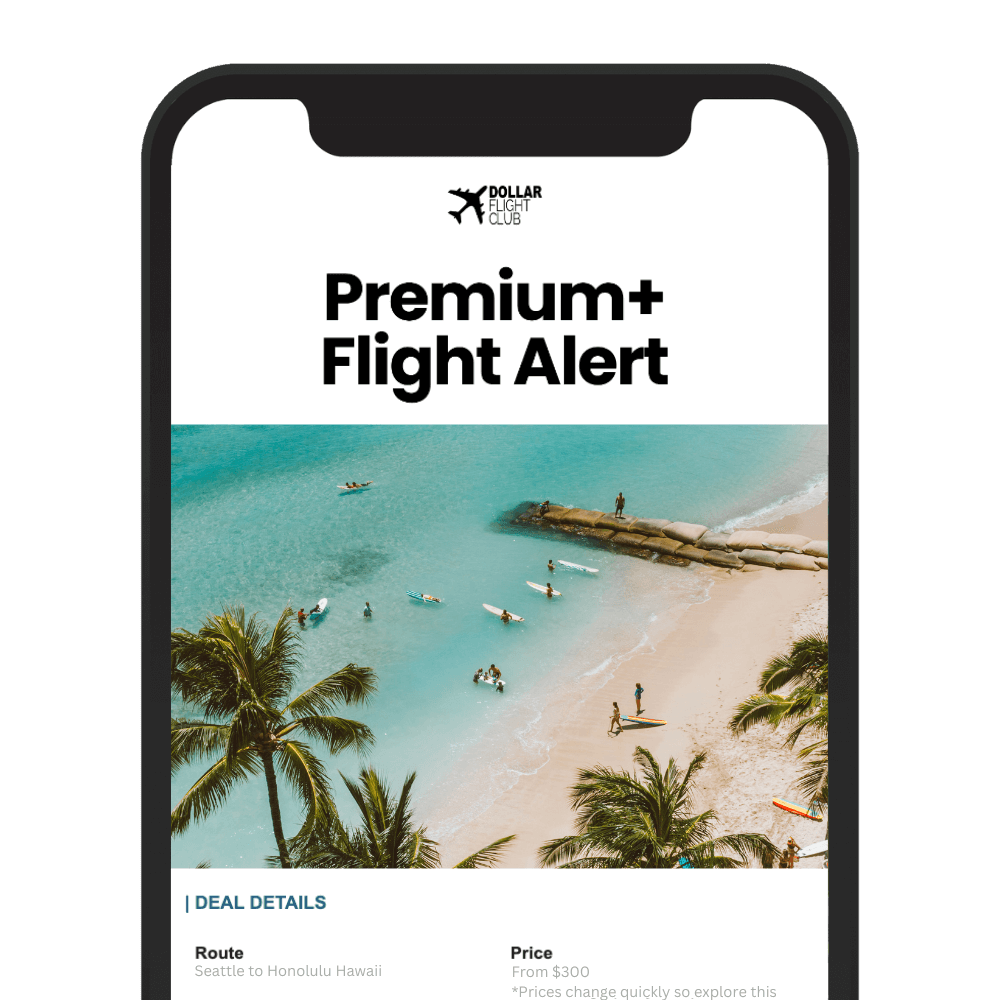
Tracking airfare prices can be time-consuming, but tools like Dollar Flight Club simplify the process. This service sends personalized email and SMS alerts when discounted fares become available, including deals for secondary airports that might otherwise go unnoticed.
Members of the Premium+ plan ($99/year) get even more perks, such as SMS alerts, business class deals, and exclusive member-only fares. For those on the free Basic plan, domestic flight deals are still available for one departure airport. With discounts of up to 90%, just one alert could easily offset the cost of a yearly membership. If you’re serious about finding great deals, Dollar Flight Club can be a helpful resource.

When Does Flying Into a Secondary Airport Make Sense?
Situations Where Secondary Airports Work Well
Secondary airports can be a great choice if your schedule allows flexibility and the fare difference is substantial. This is a core strategy in finding cheap flights. These airports are especially appealing to leisure travelers or those visiting friends and family, as low-cost carriers like Allegiant, Southwest, and Ryanair often operate heavily on these routes. On top of lower fares, smaller airports come with added perks: shorter security lines and cheaper parking fees, which can make your overall travel experience smoother and more budget-friendly.
When to Choose the Primary Airport Instead
Primary airports are usually the better option for international flights or itineraries with tight connections. If the fare difference is less than $50–$75 per person after factoring in ground transportation costs, the convenience of a major hub often outweighs the savings. Late-night arrivals at secondary airports can also pose challenges, as rideshare options may be limited, leaving you with costly taxi fares. Weigh these considerations carefully to make the best choice for your trip.
A Simple Framework for Deciding
Here’s a quick checklist to help you decide if a secondary airport is the right fit:
- Savings threshold: Make sure the fare difference is more than $50–$75 per person after accounting for ground transportation costs. If not, stick with the primary airport.
- Total travel time: Factor in any additional travel time to and from the secondary airport. If it adds more than 90 minutes each way, think carefully about whether the savings are worth it.
- Return-trip logistics: Double-check that the round-trip costs and logistics still make sense before committing to a secondary airport.
If all three criteria align, flying into a secondary airport is likely a smart choice.

Conclusion: Travel Smarter by Considering Secondary Airports
Choosing a secondary airport can be a savvy way to stretch your travel budget. For example, a round-trip flight to Las Vegas from Burbank (BUR) costs just $76.99 compared to $128.84 from LAX – a 40.3% savings. Similarly, a February 2026 flight to Orlando from BWI is priced at $76.99, while the same trip from Dulles costs $156.86 – a 50.9% savings. These price differences can make a big dent in your overall travel expenses.
When deciding, factor in all costs: airfare, parking (ranging from $7–$12 per day at secondary airports versus $25–$40 at major hubs), ground transportation, and the value of your time. If the math works in your favor, opting for a secondary airport is clearly the better move. However, primary airports might still be the best choice for certain scenarios, like tight connections, international travel, or late arrivals when transit options are limited. A quick comparison using the tips from earlier can help you make the right call.
To stay ahead of the game, consider using fare alerts to find cheap flights. For instance, Dollar Flight Club offers email and SMS notifications for discounted fares – sometimes up to 90% off. Their Premium+ plan ($99/year) includes perks like SMS alerts, unlimited departure airport options, and business class deals, giving you an edge in snagging the best prices.
Finally, don’t forget to broaden your search. Looking at airports within a 100–200 mile radius could reveal unexpected savings that make your trip even more affordable.
FAQs
How do I know a secondary airport is actually cheaper overall?
When deciding if a secondary airport is actually saving you money, it’s important to look beyond just the ticket price. Add up all the costs involved in your trip, including:
- Airfare
- Baggage fees and seat selection charges
- Parking and ground transportation (like gas, tolls, rideshares, or public transit)
Don’t forget to account for the value of your time. For example, if your commute or transfers take longer, consider assigning a value of around $20–$40 per hour to that extra time. A cheaper ticket only makes sense if these additional expenses don’t cancel out the savings.
Which extra fees can wipe out a cheaper secondary-airport fare?
When choosing a lower fare, it’s easy to miss the hidden costs that can quickly add up. Many budget airlines charge extra for things like carry-on bags, checked luggage, or even selecting your seat. These fees can range from $15 to $35 per service, per flight leg.
On top of that, don’t forget about ground transportation. If you’re flying out of a more distant airport, you might face higher costs for gas, tolls, or rideshare services. Plus, parking fees can stack up if you’re leaving your car behind. And if your flight gets delayed or rescheduled – something more common with limited flight schedules – you might need to budget for extra meals or even an unplanned overnight stay.
What’s the best way to search multiple nearby airports at once?
The smartest approach is to use travel metasearch engines like Google Flights or KAYAK. These platforms often include a nearby airports feature, which broadens your search to cover regional airports. All you need to do is select your primary city and activate this option. Many of these tools also provide map views, making it easier to identify lower fares at alternative airports. For consistent updates on deals, consider setting up fare alerts for several airport combinations.