Yes, I can pack for 14 days in one carry-on. The short version is simple: I bring about 7 days of clothes, plan one laundry stop, stay inside the common 22 x 14 x 9-inch carry-on limit, and cut the extra stuff that usually never gets worn (or swap them for useful travel gifts).
Here’s what matters most:
- I check my airline’s size and weight rules first, because some airlines allow the standard 22 x 14 x 9 inches, while others cap carry-ons at 17.6 lbs. to 22 lbs.
- I pack a small mix-and-match wardrobe, not 14 separate outfits
- I keep shoes to two pairs max and wear the heavier pair on the plane
- I roll soft clothes and use packing cubes to save about 20%–30% of space
- I shrink toiletries down fast by using TSA-size liquids and solid items
- I put first-day items in my personal item, including one spare outfit
- I cut “just in case” items, because about 90% of them usually go unused
If I do those few things, I can skip checked bag fees that often run about $40 each way, avoid baggage claim, and move through the airport with less hassle.
This article boils the process down to four parts: pick the right bag, pack a small wardrobe, keep toiletries and tech tight, and leave dead weight at home.
1. Choosing the Right Carry-On
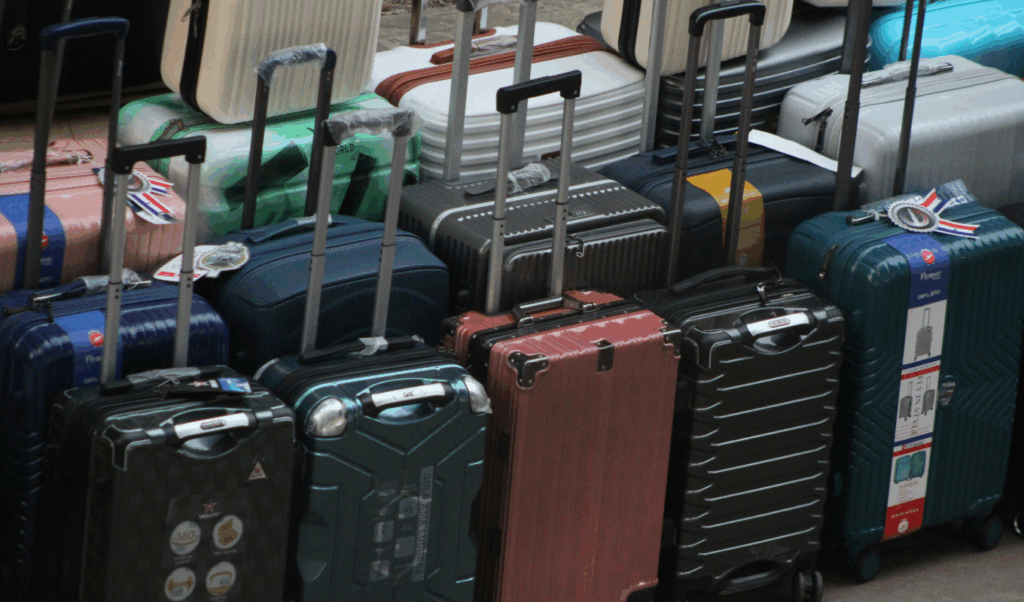
Your bag sets the limit. Pick the right one, and two weeks with one carry-on becomes much more doable. Pick the wrong one, and you could end up handing it over at the gate. Once the bag is locked in, the rest of your packing gets simpler.
Check airline size and weight limits before packing
Carry-on rules are not the same across airlines. Most major U.S. carriers – American, Delta, and United – allow bags up to 22 x 14 x 9 inches, including wheels and handles, and domestic carry-ons often come with no weight limit.
That said, international and budget airlines tend to be stricter. TAP Air Portugal limits carry-on weight to 8 kg, or about 17.6 lbs. Ryanair and Wizz Air set a 10 kg, or 22 lbs, cap and may charge €40–€60 at the gate if a bag is too large.
If your trip includes more than one airline, follow the strictest rule on the route. Check each airline’s policy before you pack, then weigh your bag at home before you leave.
Pick the right bag style for the trip
The best bag depends on how you travel. A bag should match the pace of the trip. Soft-sided bags usually weigh less and give you a little flex. Hard-shell bags do a better job protecting fragile items. Spinner suitcases are great in airports, while backpacks make more sense on stairs, rough sidewalks, and public transit.
For trips with multiple cities, train stations, and lots of movement, a backpack-style carry-on usually works better. If most of your trip runs through smooth airport terminals, a spinner is often the easier choice.
Choose a bag with enough room, not extra room
A smaller carry-on helps stop overpacking before it starts. When space is tight, your packing list usually gets cleaner.
The bag’s empty weight matters too, especially on international routes. A standard carry-on often weighs 3 to 4 lbs before you put anything in it. On a flight with an 8 kg, or 17.6 lb, cap, that doesn’t leave much room. A lighter bag gives you more space for the stuff that matters.
Once the bag is set, the next move is simple: pack clothes that work together. The bag creates the limit, and the wardrobe needs to fit that limit without waste.
2. Build a Capsule Wardrobe
Plan outfits around weather, activities, and laundry
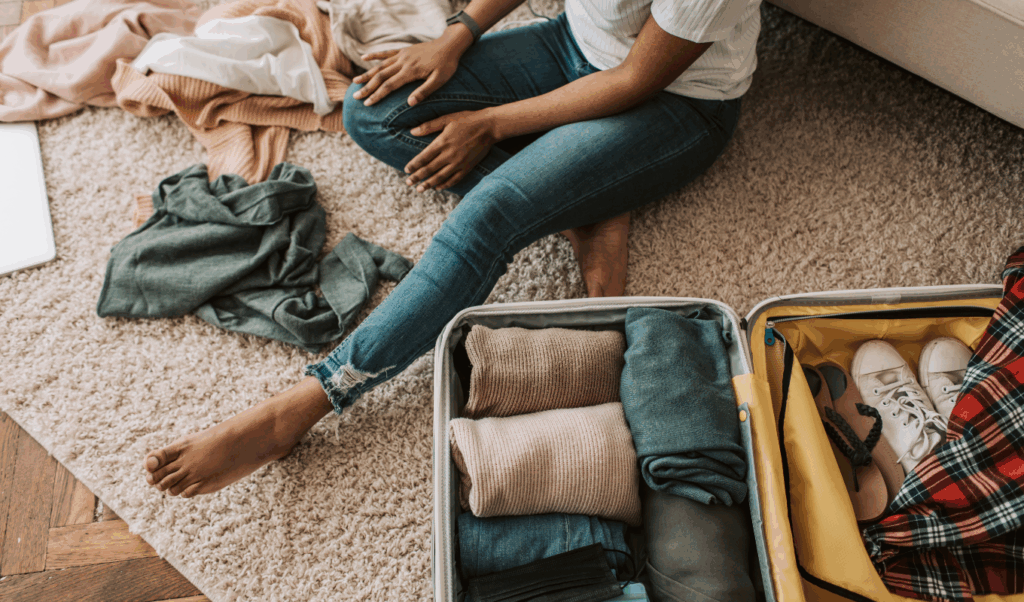
Packing for every possible scenario sounds safe, but it usually backfires. A better plan is to bring about 7 days’ worth of clothing for a 14-day trip and schedule one laundry session around day 7. That gives you more space for the things you can’t easily replace once you’re on the road. In Europe, self-service laundromats usually cost €4–€8 per load.
What your clothes are made of matters just as much as how many you bring. Merino wool helps a lot because it resists odor, can usually be worn 3–5 times before washing, and often dries overnight. Heading somewhere warm? Lightweight linen and moisture-wicking synthetics make more sense. Your weather forecast and trip plans should shape the list from the start. That’s what keeps the capsule wardrobe simple instead of messy.
The exact pieces will shift based on climate, but the basic setup stays the same.
| Feature | Warm-Weather Priority | Cool-Weather Priority |
|---|---|---|
| Core Fabrics | Linen, lightweight cotton, moisture-wicking synthetics | Merino wool, fleece, lightweight down |
| Key Layers | Ultralight windbreaker or linen button-down | Thermal base layers and a packable down jacket |
| Footwear | 1 walking shoe, 1 breathable sandal | 1 waterproof walking shoe/boot, 1 indoor shoe |
| Accessories | Wide-brimmed hat, polarized sunglasses | Beanie, thermal gloves, neck gaiter/scarf |
Neutral colors make it much easier to mix and match. That’s the trick: a small wardrobe feels bigger when most pieces work together.
Pack only the core clothing categories
A simple way to keep things under control is the 5-4-3-2-1 rule: 5 tops, 4 bottoms, 3 layers, 2 pairs of shoes, and 1 extra item like a swimsuit or a dress. That may sound a little strict at first, but most travelers only wear about 30% of what they pack. So the goal isn’t to bring more. It’s to bring a tighter set of clothes that can cover casual days, active plans, and slightly dressier moments. Then add sleepwear and underwear.
For underwear, five to seven pairs is usually enough if you’re doing a simple sink wash every 3–4 days. Keep shoes to two pairs max, and wear the bulkier pair on the plane. That one move can free up a surprising amount of space.
Roll soft items and use packing cubes by category
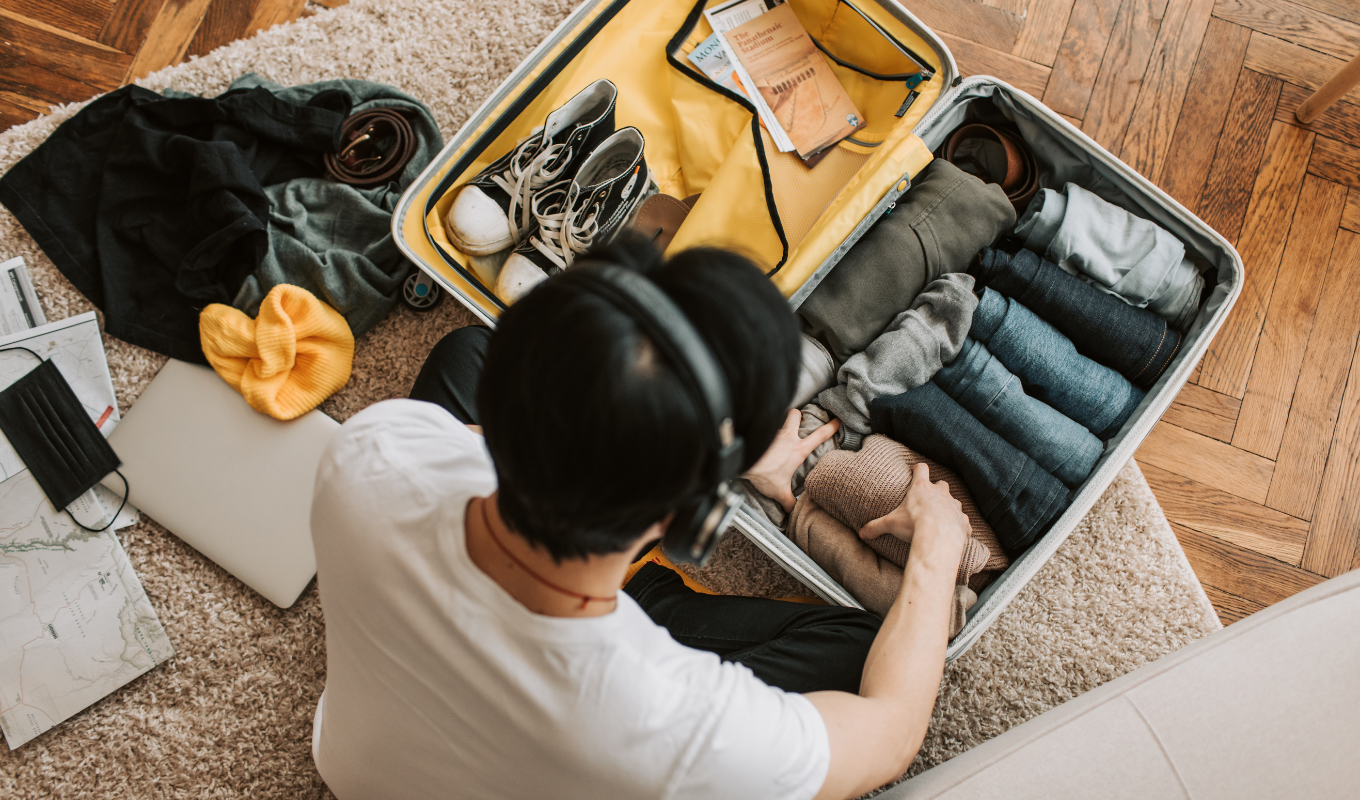
Once you’ve picked the wardrobe, how you pack it matters just as much as the item count. Rolling clothes instead of folding them can save 20%–30% of space in your bag. Soft pieces like T-shirts, activewear, casual pants, and sleepwear usually roll well and stay fairly wrinkle-free. More structured items, like button-downs or blazers, are better folded flat so they keep their shape.
Packing cubes help keep everything in order and turn loose clothing into neat blocks. A medium cube works well for your main clothes, while a smaller cube can hold underwear and socks. If you’re bringing something bulky, like a packable down jacket, a compression cube can help, though it doesn’t do as much for stiff fabrics like denim. Put shoes at the bottom of the bag, and fill them with socks or small accessories so that space doesn’t go to waste.
Once the clothing is handled, the rest of the carry-on can go to toiletries, tech, and travel-day items.
3. Pack the Right Toiletries, Tech, and Travel-Day Items
Choose travel-size and multi-use toiletries
Liquids get tight fast. TSA limits you to containers of 3.4 ounces or less, all packed inside one clear, quart-size bag, with one bag per passenger. That means every item in that bag needs to earn its spot. If one product can do two jobs, even better. Once you trim down liquids, the next easy win is a smaller tech setup.
The biggest space saver is simple: swap liquids for solids. Solid shampoo bars, conditioner bars, sunscreen sticks, and toothpaste tablets don’t count toward the liquid limit at all. You can also cut down the number of products by packing something like a multi-use makeup stick or a moisturizer with SPF. And you don’t have to fill every container to the full 3.4-ounce cap. In most cases, a smaller bottle is plenty.
Some basics are easier to buy after you land. Body wash or sunscreen, for example, are often cheaper at your destination than at the airport.
Keep chargers, power, and documents easy to reach
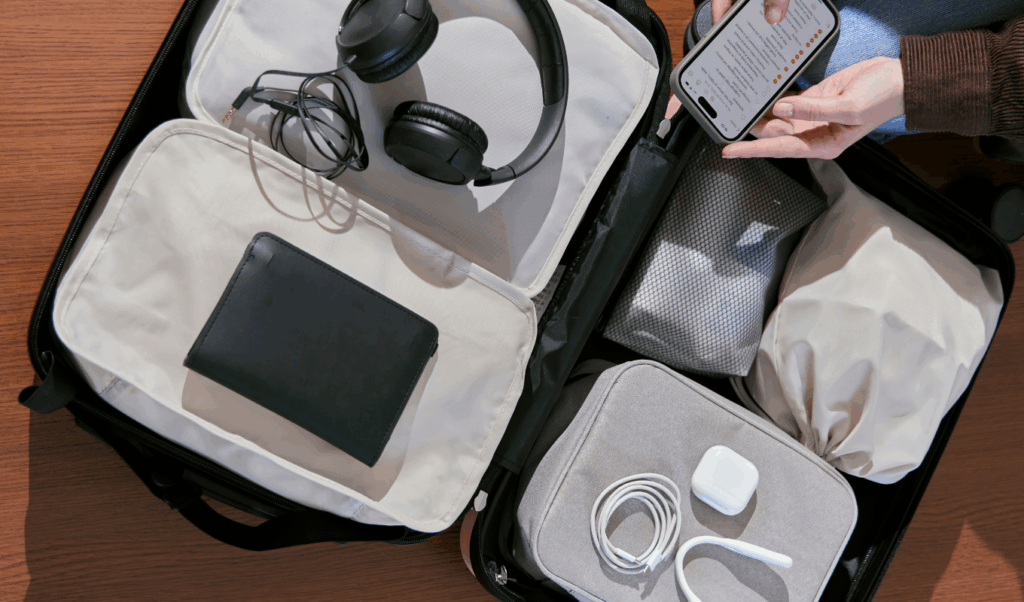
A lean tech kit is usually all you need:
- Phone
- One charging cable
- Small power bank
- Earbuds
- Universal adapter for international trips
A 10,000 mAh power bank will usually give you about two phone charges.
Keep cables, adapters, and your power bank together in one small tech pouch. Do the same with prescriptions and medications, and keep that pouch easy to grab. Your passport, ID, and boarding details should stay close too. It also helps to save digital copies of travel documents on your phone or in the cloud, just in case.
The main rule here is pretty practical: the things you may need in a hurry belong in your personal item, not stuffed in the overhead bin.
Use a personal item for first-day and in-flight needs
Your personal item should carry the stuff that matters most during transit: in-flight basics, valuables, and what you need for the first day. It should also include one spare outfit and underwear in case your carry-on gets delayed. A small backpack or a fold-flat tote works well here, and either one can double as a day bag once you arrive.
After security, move high-use items like lip balm or hand lotion into an outer pocket so you’re not digging through your bag mid-flight.
| Item Category | Personal Item (Under Seat) | Main Carry-On (Overhead) |
|---|---|---|
| Documents | Passport, ID, boarding pass | Backup travel documents |
| Electronics | Phone and core electronics | Bulky chargers, secondary devices |
| Clothing | 1 change of clothes, underwear | Main wardrobe, bulky layers |
| Toiletries | Daily must-haves (lotion, lip balm) | Full 3-1-1 liquid bag, solid bars |
If something still doesn’t have a clear job, that’s usually a sign you can leave it behind.
4. Cut the Items That Waste Space
After the bag, wardrobe, and basics are set, the last step is simple: cut anything that doesn’t earn its spot.
Cut duplicate outfits, extra shoes, and just-in-case items
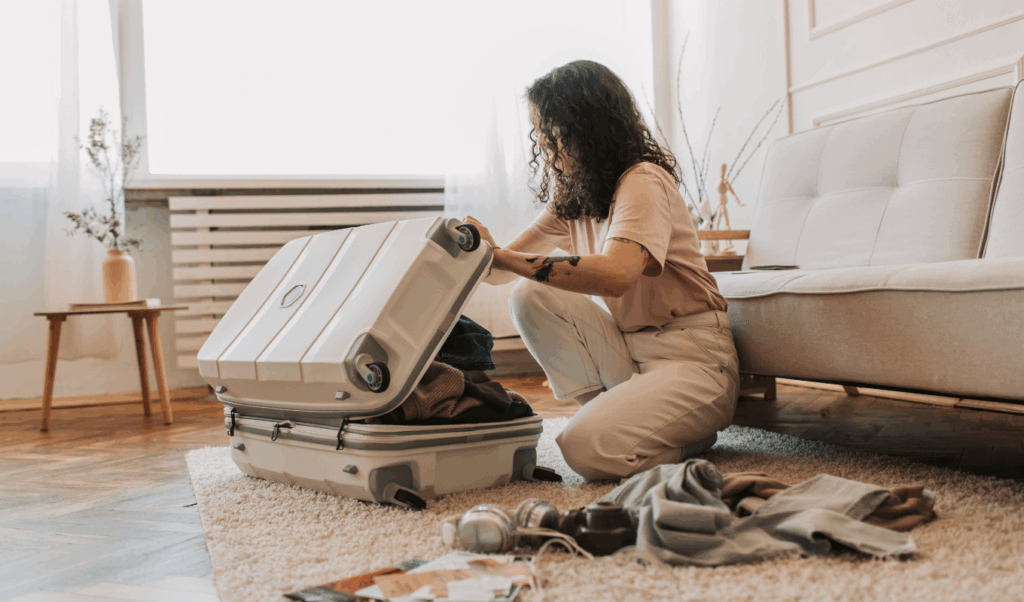
The usual space-wasters show up fast: too many shoes, duplicate jeans, and outfits for rare situations. About 90% of just-in-case items never get used during a trip. That formal dress or third pair of sneakers? It usually stays untouched.
Shoes are one of the biggest space hogs. Every extra pair takes up room that could fit several days of clothing. Bulky electronics do the same thing. Carrying both a laptop and a tablet can turn your bag into an electronics drawer. In most cases, one main device is enough.
The biggest space drains are often the easiest things to cut.
| Item Category | Leave Behind | Bring Instead |
|---|---|---|
| Electronics | Laptop and tablet together | One primary device and one charging cable |
| Outerwear | Multiple heavy coats or sweaters | One packable down jacket and lightweight layers |
Replace extras with simple travel habits
The fix isn’t fancy. Pack less. Planning one laundry stop around day 7 or 8 can cut your clothing list in half.
It also helps to wear your bulkiest items on the plane instead of packing them. Boots, outerwear, and heavier layers take up a lot of room in a carry-on, so wearing them frees up space right away.
Conclusion: Pack Light and Move Through the Airport Faster
A two-week carry-on trip usually comes down to a few steady choices: check the airline’s size and weight limits before you pack, pick a bag that fits those limits without extra empty space, build a flexible wardrobe around neutral colors and multi-use pieces, use rolling and packing cubes to keep things tidy, and cut anything that doesn’t serve a clear daily use.
On many domestic routes, first checked bags cost about $40 each way. Skip that fee, skip baggage claim, and walk straight out of the airport when you land.
FAQs
How do I pack for different weather in one carry-on?
Build a capsule wardrobe with neutral pieces that mix and match easily. The goal is simple: pack fewer items that work in more combinations.
Stick with lightweight layers you can stack, such as:
- a warm layer
- a piece that works both indoors and outdoors
- a thin, packable shell that resists rain
For cold weather, pack thermal base layers. And instead of stuffing your bag with the bulkiest gear, wear heavy items like a coat or boots on the plane. It saves space fast.
Bulky sweaters and jackets can eat up room, so use compression packing cubes to squeeze down the volume and keep your bag easier to manage.
What should go in a personal item instead of the carry-on?
A personal item should carry the things you’ll want during the flight or need to keep close for safety. Think passport, wallet, laptop, tablet, headphones, liquids, snacks, prescription medications, jewelry, and other valuables.
It’s also smart to pack one change of clothes in your personal item. That way, your basics stay with you if your carry-on gets gate-checked.
How can travelers avoid overpacking for a two-week trip?
To avoid overpacking for a two-week trip, build a capsule wardrobe instead of packing a separate outfit for every day. A simple rule works well: pack about seven days of clothing and plan to do laundry once during the trip.
You can keep it easy with a formula like 5-4-3-2-1, or just pack 4 to 5 tops and 2 to 3 bottoms in neutral pieces that all work together. That way, you get more outfits from fewer clothes.
A few small moves help a lot:
- Wear your bulkiest items on the plane
- Use compression packing cubes
- Do a trial run at home and remove anything you don’t need
It’s a simple shift, but it saves space fast and makes packing feel a lot less chaotic.