Most travelers default to whatever ground transportation is most familiar, but that’s rarely the cheapest option. Here’s what actually works:
Here’s the short version:
- Cheapest for most solo travelers: Public transit
- Best $0 option: Hotel shuttle, if offered
- Often best for 3+ people: Taxi or prebooked private ride
- Best when I’m tired or arriving late: Taxi or prebooked transfer
- Usually worst value for a hotel-only trip: Rental car
The key is looking at the all-in price, not just the headline fare. A low base rate can grow quickly once bags, extra riders, tolls, airport fees, tips, parking, or surge pricing get added in. A shared shuttle might look cheap at $25 per person, but for a group of four that adds up to $100, at which point a private ride may actually cost less.
Quick Comparison
| Option | Usual Cost | Best For | Main Catch |
|---|---|---|---|
| Public transit | $2.50–$10.75 | Solo travelers, light bags | Walks, transfers, late-night limits |
| Hotel shuttle | $0 in some cases | Hotel guests | Fixed schedule |
| Shared shuttle | $20–$40 per person | Solo travelers with bags | Slow due to many stops |
| Rideshare | $20–$68+ | Direct rides with app tracking | Surge and airport fees |
| Taxi | $30–$70+ | Late arrivals, heavy bags, curb pickup | Traffic, tips, tolls |
| Rental car | $85–$120+ per day all-in in many cases | Trips where I keep the car | Fees, parking, counter add-ons |
When arriving at a new airport, check options in this order: hotel shuttle first, then public transit, rideshare, taxi, and rental car as a last resort. The cheapest ride is always the one that fits the arrival time, bag load, and group size — without hidden costs showing up later.

1. Public Transit
Public transit usually wins on price. But that only holds up if your hotel is close to a stop and your arrival lines up with service hours. Start here as your price baseline before you compare shuttles, rideshares, taxis, and rental cars.
Total Cost
Public transit is often the cheapest choice, especially if you’re traveling solo. For example, New York’s AirTrain plus subway costs $10.75, Los Angeles’ FlyAway Bus costs $1.75, and Chicago’s CTA fare is $2.50.
That said, fares are charged per person. So if you’re traveling with three or more people, the total can end up higher than one rideshare. And if your hotel isn’t close to the last stop, you’ll need to factor in a taxi, another transit leg, or a long walk with bags.
Low fare doesn’t always mean low total cost.
Door-to-Door Time
The ride itself is only part of the trip. You also need to count the walk to the station, time spent waiting, any transfers, and the last stretch to your hotel.
Timing matters too. Transit runs on a set schedule, so a late flight can throw off the whole plan. Before you land, check the last departure time. Many systems scale back service late at night.
Luggage Burden
Public transit is usually the hardest option when you have luggage. Stairs, narrow turnstiles, crowded platforms, and the lack of bag space can turn a cheap ride into a hassle.
Scam Risk
Scam risk is low, which is a nice change of pace. Still, buy tickets only from official machines or the transit app. If someone walks up and offers to “help” at the machine, pass.
When transit is too slow, stops running too early, or leaves you too far from your hotel, the next choices cost more but can save a lot of time.
2. Shared and Hotel Shuttles
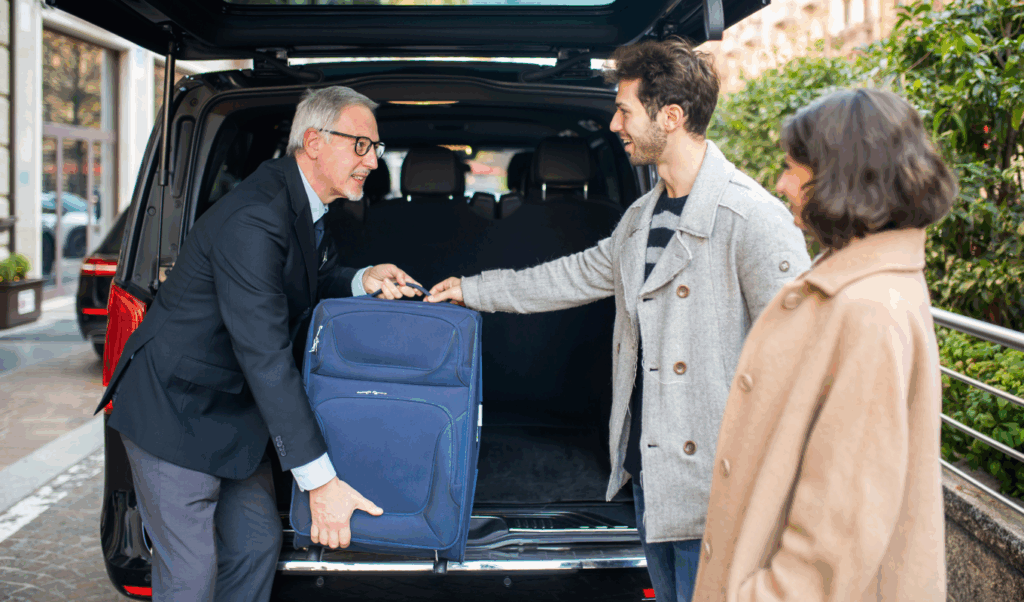
If public transit feels too slow or doesn’t get you close enough to your hotel, shuttles are often the next cheapest pick. They sit in the middle: pricier than public transit, but cheaper than a private ride. For solo travelers and small groups, that can be a smart middle ground when saving money matters more than getting there fast.
Total Cost
Start with your hotel. About 30% of hotels offer complimentary airport shuttles, so it’s worth checking the hotel’s website before you book anything else. That “free” ride may already be built into your room rate or resort fee, so read the fine print.
If your hotel doesn’t have a shuttle, a paid shared shuttle in the U.S. averages about $25 per person. At many major airports, prices land in the $20–$40 range. For one traveler, that’s often a good deal.
Groups are where the math changes. Three people paying $35 each comes to $105. Once you’re in that range, it makes sense to check the price of a private transfer before you book.
And don’t skip tips. Even with complimentary hotel shuttles, drivers who help with bags usually expect a gratuity.
Door-to-Door Time
Shared shuttles are usually the slowest ground option. They stop at several hotels along the way, which can stretch a short ride into a long one. Timing can also work against you. If your flight arrives between scheduled runs, you may end up waiting.
Prebooking 24–48 hours ahead can help you avoid some of that hassle.
Luggage Burden
This is one area where shuttles can make life easier. If you’re traveling with a few large bags, shared and hotel shuttles usually give you more luggage room than a standard rideshare car.
Still, check the baggage rules before you book. Oversized gear, like ski equipment, can come with extra fees.
Scam Risk
Be careful in the arrivals hall. If someone walks up offering a ride, keep moving. Use only official desks or your prebooked pickup spot, and confirm tolls, surcharges, and luggage fees before you get in.
If a shuttle looks too slow or too pricey for your group, rideshares are often the next thing to compare.

3. Rideshares
If shuttles feel too slow or take a roundabout route, rideshares are usually the next budget-friendly pick. Uber and Lyft often cost less than taxis when surge is low, and the apps make pickup much easier to follow in real time.
Total Cost
The catch is simple: airport fees and surge can wipe out the usual savings fast. Before you book, check both apps. Most major U.S. airports add a $2 to $6 airport surcharge before tolls and tips.
Typical fares and airport surcharges at major U.S. airports:
| Airport | UberX Avg. | Lyft Avg. | Airport Surcharge |
|---|---|---|---|
| JFK (New York) | $54–$68 | $52–$65 | $3.50 |
| LAX (Los Angeles) | $30–$42 | $28–$38 | $4.00 |
| ORD (Chicago) | $35–$45 | $32–$42 | $5.00 |
| ATL (Atlanta) | $28–$36 | $26–$33 | $3.85 |
| DFW (Dallas) | $22–$30 | $20–$28 | $2.50 |
It also pays to compare Uber and Lyft every time. Lyft was cheaper at most of the 10 busiest U.S. airports on non-surge fares, with San Francisco as the exception. That quick side-by-side check can save about $5 to $10 per trip.
Surge pricing is the big wildcard. It tends to hit during commute hours, late-night arrivals, and after flight delays. Once surge goes above 1.5x, a flat-rate taxi often ends up cheaper. If you can wait about 15 minutes, surge can drop by roughly half.
Door-to-Door Time
Rideshares usually show up in 3 to 6 minutes, which sounds great on paper. But airport pickup zones can mean an extra walk from baggage claim, so the full trip often takes a bit longer than the app first suggests.
Luggage Burden
Big suitcases and larger groups can change the math. You may need an XL vehicle, and that pushes the fare up. Picking the right car size from the start saves you from that awkward pickup-zone shuffle with too much luggage.
Scam Risk
Stick to the official pickup zone. Then check the license plate, car model, and driver photo before you get in. And if someone offers an off-app cash ride, pass on it.
If surge or an XL upgrade sends the price climbing, taxi pricing is worth a side-by-side check next.
4. Taxis
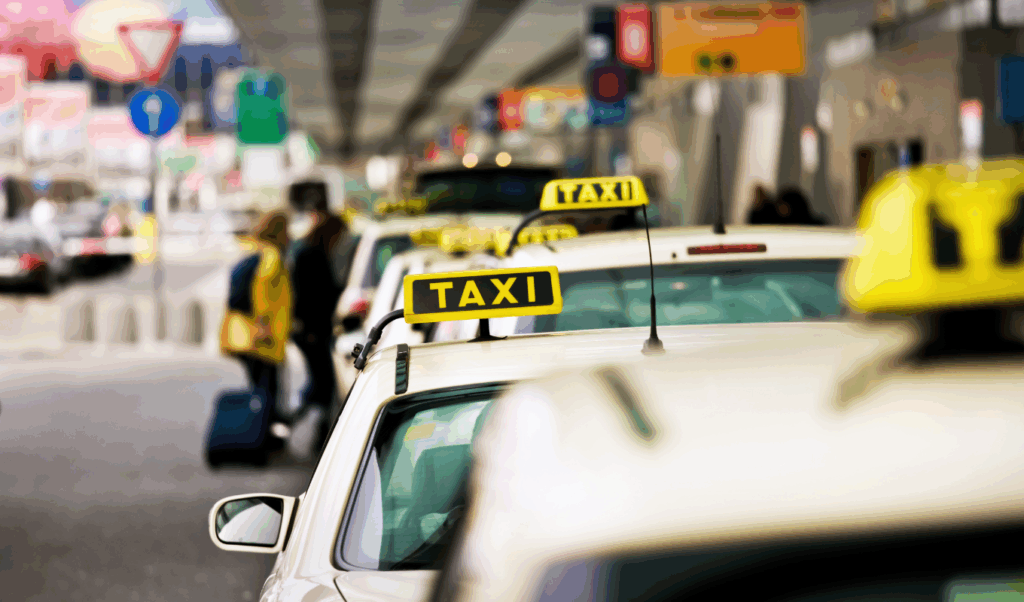
Taxis don’t use surge pricing, which makes them a solid backup when rideshare prices spike. They often cost more than public transit, but they can still come in below a surge-priced Uber or Lyft. So if you want a curbside ride without the app drama, a taxi is often the practical fallback.
Total Cost
Your final fare will usually include a base fare, an airport surcharge, tolls, and a customary 10–15% tip. Airport surcharges often add $1.00 to $5.50 to the total. At JFK, for example, there’s a flat fare of $70.00 to Manhattan, with tolls and tip added after that.
Outside flat-rate zones, the meter keeps running in traffic. And that’s where things can get pricey fast. If you’re stuck in a slow crawl on the expressway, the total will keep climbing.
Ask before you leave the taxi stand whether your trip qualifies for a flat rate.
Door-to-Door Time
This is where taxis can earn their keep. Waits are usually 5–15 minutes at managed airport taxi ranks. And unlike rideshares, you don’t need to trek to a remote pickup lot. You grab your bags and head straight to the stand.
That kind of curbside simplicity matters most when you’re tired, traveling with kids, or dragging heavy luggage through a busy airport.
Luggage Burden
Licensed airport taxis usually offer more trunk space than standard rideshare sedans, so they’re often a better pick if you have multiple checked bags or oversized luggage.
Scam Risk
The safest move is simple: use the official taxi rank. Ignore anyone inside the terminal who offers you a ride, and stick to the marked stand.
A few basic checks can save you a headache:
- If a driver says the meter is broken or refuses to use it, walk away.
- Make sure the meter starts at the regulated rate.
- Paying by card gives you a cleaner paper trail.

5. Rental Cars
Rental cars usually make sense only if you’ll keep the car after check-in. If you just need to get from the airport to your hotel, they’re often the most expensive choice.
Total Cost
That $45/day rental can jump to $85–$120/day once everything gets added in: airport surcharges of 10%–25%, state and local taxes of 15%–30%, LDW insurance at $15–$35/day, hotel parking at $40–$75/night in cities like San Francisco or Manhattan, and tolls of $5–$20/day.
There are two easy ways to cut that bill down a bit:
- If your credit card includes primary rental insurance, you can decline the counter’s LDW and save $105–$245 on a 7-day rental.
- Booking from an off-airport location instead of the terminal usually saves 20%–35% on the base rate.
And that’s the catch: the base rate can look fine, but the final bill tells the real story.
Price isn’t the only issue here.
Door-to-Door Time
Rental cars usually take the longest. You may need to wait for a shuttle, stand at the counter, handle paperwork, inspect the car, then drive to the hotel and deal with parking.
That’s a lot of steps before you even make it to your room.
Luggage Burden
Rental cars work well for families or people with heavy luggage, since you have your own space and don’t need to carry bags through stations or onto buses. Still, that convenience comes with more pickup and drop-off hassle.
Scam Risk
The biggest problem is usually counter add-ons. Prepaid fuel is a common one. It sounds simple, but it often costs more than filling up the tank yourself. Otherwise, agencies may charge $7–$10 per gallon.
When you compare a rental with transit, shuttles, rideshares, or taxis, use the all-in cost, not the base rate.

How to Pick the Cheapest Option for Your Trip
Use the same filter at every airport: look at the all-in cost first, then time, then pickup hassle.
Before you land, check the airport ground transportation page, your hotel’s directions page, and both rideshare apps. Then confirm the transit route in Google Maps. The key is simple: go by the full price, not the headline fare.
Group size can change the math fast. If you’re traveling with three or more people, a private transfer or large taxi can cost less than buying separate tickets.
If rideshare prices jump after you land, wait 15–20 minutes. That small pause can save money. And if you’re arriving late at night, prebook 24–48 hours ahead so you can lock in the price and pickup.
Here’s a quick way to match your trip to the cheapest likely option:
| Scenario | Usually Cheapest | Worth the Upgrade? | Why Upgrade? |
|---|---|---|---|
| Solo traveler (backpack) | Public transit | Rideshare | Faster than transit for late-night or bad weather |
| Couple (checked bags) | Public transit or shared shuttle | Taxi or rideshare | No stairs or transfers |
| Four travelers | Free hotel shuttle, if available | Pre-booked transfer | Fixed pickup at arrivals |
| Late-night arrival | Taxi | Pre-booked transfer | More certainty, fewer late-night transit hassles |
| Multi-day regional trip | Rental car | Larger vehicle | Extra comfort for long drives; check hotel parking fees first |
One more thing: check the pickup rules before landing. Some airports push rideshares to a remote lot, which can turn a “cheap” ride into a slow, annoying one. In that case, a curbside taxi may be faster for only a small extra cost.

Conclusion
Public transit is usually the cheapest way to get from the airport to your hotel. The main exception is a free hotel shuttle. If your hotel offers one, it’s often the best deal on the board because you get door-to-door service for $0. That’s hard to top. So before you book anything else, check the hotel’s website.
It also helps to look at the total cost, not just the fare you see first. A low headline price can be a bit misleading once you add extra riders, bags, or late-night options.
For groups of three or more, the numbers can flip. A private taxi or prebooked transfer may end up costing less per person than public transit or shared shuttle seats. And timing matters too. Late-night arrivals often make prebooked transfers a better pick, since transit service tends to thin out after hours.
Rental cars usually don’t make much sense for a simple airport-to-hotel ride unless you already plan to use the car for the rest of your trip.
FAQs
How do I compare the real total cost?
Look past the base fare and run the numbers for your whole group, not just one person.
That’s where the price picture changes. A cheap-looking ride can climb once you add airport pickup fees, tolls, tips, surge pricing, or even a second ride from a station or drop-off point.
For groups, it helps to compare:
- A private car or taxi’s flat rate
- The total cost of each person buying public transit tickets
Sometimes public transit looks cheaper at first glance, but the gap shrinks fast once everyone pays separately and you tack on those extra charges.
When is a taxi cheaper than a rideshare?
Taxis are often the cheaper pick when rideshare apps switch to surge pricing during busy periods. Under normal conditions, rideshare apps are usually 20–40% cheaper. But once pricing climbs past 1.5x, that price edge can disappear fast.
Airports are another case where taxis can win on price. Many offer flat-rate fares, which give you a set cost up front. On crowded travel days or holidays, that fixed fare can beat a surged rideshare by a good margin.
Before you book, it’s smart to check both.
What should I do if I arrive after transit stops?
If you’re getting in after public transit shuts down, don’t count on buses or trains unless you checked late-night schedules ahead of time.
Go with a rideshare, your own parked car, or a pre-booked private transfer instead. A pre-booked private transfer is often the safest and least stressful pick for late-night arrivals in an unfamiliar city. You get a fixed price, and your driver is already waiting for you.