Business class doesn’t have to mean full price. With flexible dates, the right search strategy, and a clear-eyed look at points versus cash, you can fly up front for a fraction of what most people pay — but only if you compare the total trip cost, not just the ticket price.
- Search more routes: Compare nonstop and connecting flights, including what it costs to reach a nearby airport. A connection or a quick drive can drop the fare significantly.
- Check deals and upgrades: Set fare alerts, review paid upgrade offers at checkout, and treat mistake fares as a bonus when they appear — not a strategy to rely on.
- Compare points with cash: Confirm award seat availability before transferring points, then factor in taxes, fees, and transfer times. Cash sometimes wins.
- Verify the seat and rules: Check every flight segment for seat type, baggage allowance, lounge access, and cancellation terms. Not all business class seats are equal.
The lowest fare isn’t always the lowest-cost trip. Extra flights, overnight hotel stays between connections, and upgrade charges can quietly erase the savings.

1. Find Lower Fares With Flexible Dates and Routes
Why Business Class Prices Vary
Business class fares change with the route, demand, and fare bucket. When the cheaper seats sell out, prices can jump fast. Here’s what affects fares – and where you have room to adjust:
| Pricing factor | Likely effect | What you can control |
|---|---|---|
| Competition | Rival airlines can push fares down | Compare departure hubs |
| Seasonality | Peak periods usually cost more | Try shoulder-season dates |
| Corporate demand | Busy business-travel periods push prices up | Test different weekdays and weekends |
| Booking deadlines | Lower fares may require booking 21–60 days ahead | Search before those deadlines |
| Ticket flexibility | Refundable fares usually cost more | Choose restrictions you can accept |
Flexibility gives you more chances to find a lower fare when prices shift.
Compare Dates, Airports, and Connections
Set the cabin to Business, then use a fare calendar to check shifts of one or two days and price patterns over longer periods. Compare nearby airports, nonstop flights, and connecting routes. Before booking, confirm the final price and restrictions directly with the airline.
| Route option | Savings | Trade-off |
|---|---|---|
| Nonstop | Often limited | Less travel time |
| One-stop on the same ticket | Can offer solid savings | Longer journey; missed-connection protection |
| Nearby airport | Can offer large savings | Added ground transportation |
| Separate positioning flight | Potentially the largest savings | Extra costs; generally no missed-connection protection |
Check Seats, Benefits, and Total Cost
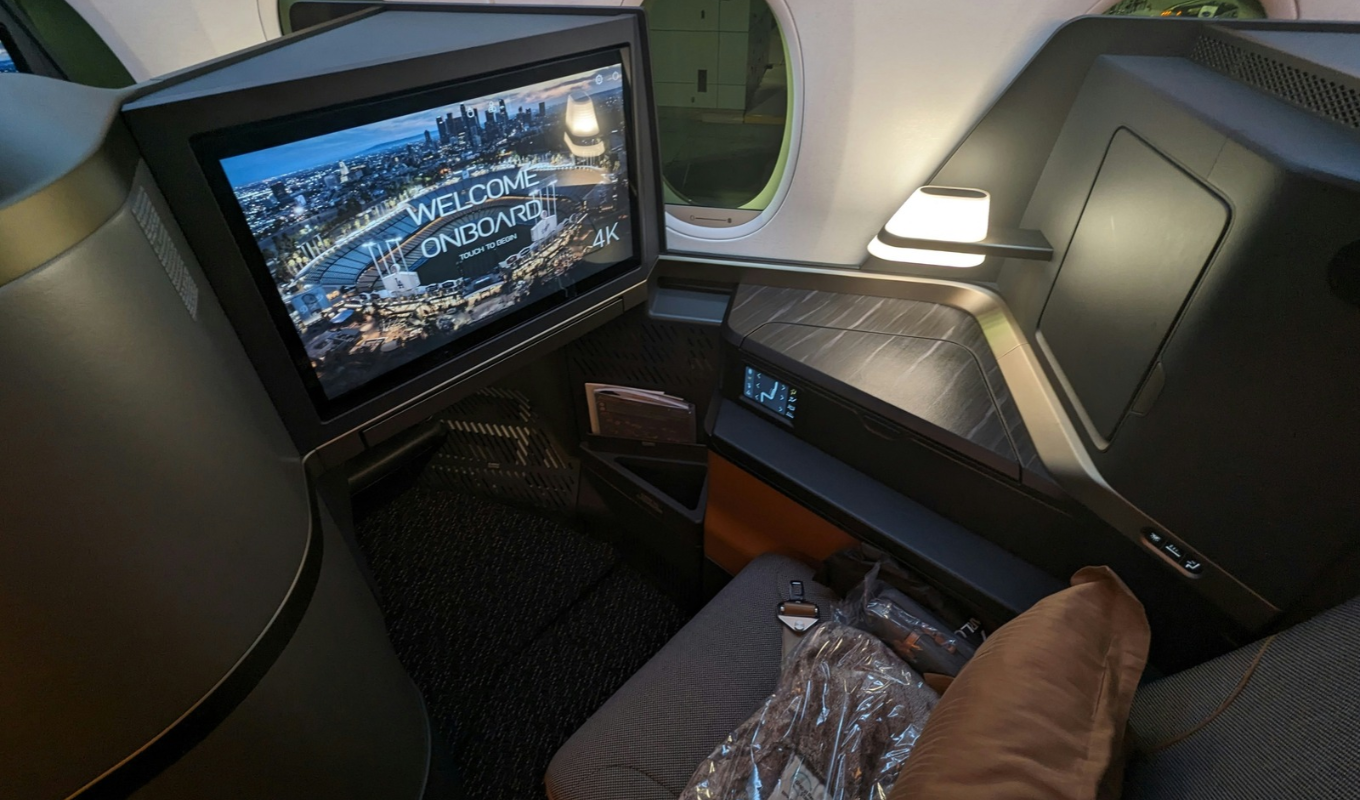
Check the cabin and seat map for every flight segment. A business class fare doesn’t guarantee a lie-flat seat on short-haul legs. Also verify lounge access, baggage allowances, seat selection, and change or refund rules.
Compare the full trip cost – not just the airfare. Include positioning flights, baggage, transfers, hotels, and paid extras. If you book separate tickets, leave at least four hours between flights, or stay overnight when practical. Separate tickets don’t include missed-connection protection.

2. Watch for Fare Deals and Upgrade Offers
Set Your Budget and Start Tracking Fares
Once you’ve chosen your routes, track fares and upgrades for those exact itineraries. Set an all-in budget, then compare nearby airports – you could save hundreds on a business-class ticket. When you book directly with an airline at least seven days before departure, the 24-hour rule provides either a fare hold or penalty-free cancellation while you firm up your plans.
If a fare drops sharply, check whether it might be a mistake fare.
Handle Mistake Fares With Care
Mistake fares come from accidental pricing errors, not planned sales. But a low price alone doesn’t mean the airline made a mistake. If you spot a likely error, book fast, avoid calling the airline to verify it, and know that the fare may disappear within hours.
After booking, confirm your 13-digit e-ticket number and check the reservation in Manage Booking. Airlines can cancel mistake fares even after issuing tickets, so wait at least two weeks before booking nonrefundable hotels or tours.
Check Paid Upgrades, Bids, and Mileage Options
Booked economy or another lower cabin? Check the airline app, reservation page, and post-booking emails for paid upgrade offers or bid-to-upgrade links. Look again two to three weeks before departure, at online check-in, and at the airport counter.
Before bidding or using miles, compare your original ticket plus the full upgrade cost against buying business class outright. Check which fare classes qualify, any cash copay, and your waitlist priority. An empty seat map doesn’t mean a cheap upgrade is available.
If the cash upgrade is still over budget, compare points and miles next.

3. Compare Points, Cash, and Long-Haul Airlines
If cash upgrades are still outside your budget, look at award seats and routes where your money or points go further.
Find Award Seats Before Transferring Points
Search airline and partner awards across several dates and departure airports to find the lowest business-class price in points. Compare limited saver-level awards with dynamic awards, whose prices change with demand.
Seats.aero can help you find options, but coverage, search windows, and paid features vary. Confirm availability on the airline’s website before transferring points. Third-party tools can show seats that aren’t actually available or listings that are out of date.
Before you transfer, check taxes and surcharges in U.S. dollars, the transfer ratio, processing time, and redeposit rules. Transfers are usually irreversible and can take days. The seat could disappear while you wait.
Compare Booking and Upgrade Costs
Compare the award cost with a cash fare you would actually pay – not a high-priced ticket you’d never buy. Calculate value per point with this formula:
(Comparable cash fare − award taxes and fees) ÷ points required.
| Method | Upfront cost | Availability | Flexibility and risk | Best use |
|---|---|---|---|---|
| Discounted cash ticket | Full fare | Seats offered for sale | Fare rules control changes and refunds | Fixed dates or a strong sale |
| Transferred points | Points plus taxes and fees | Program-specific award inventory | Transfers generally cannot be reversed | Confirmed awards with worthwhile savings |
| Existing airline miles | Miles plus taxes and fees | Program-specific award inventory | Check redeposit fees and refund terms | Using an existing balance without transfer delays |
| Upgrade certificates | Eligible ticket; possible added charges | Separate upgrade inventory | May not clear; certificate rules apply | Eligible travelers comfortable flying the original cabin |
| Paid airport upgrade | Original ticket plus upgrade charge | Unsold seats at departure | Offer may never appear | Travelers happy to stay in economy |
A confirmed business-class award is often the safer choice when you want the cabin locked in. A more expensive, upgrade-eligible economy fare can wipe out your savings before the upgrade even clears. If you’d regret flying economy at that total price, choose a confirmed seat instead.
Choose Airlines by Route and Seat
With the award price in hand, compare routes, aircraft, and surcharges. Start with routes that regularly offer good cash fares or award prices, then check the seat and fees.
Compare total travel time and the final price, including the cost of reaching a different departure airport. Before paying, verify the actual aircraft, lie-flat seat, lounge access, and seat-selection benefits. Qsuite and similar premium seats aren’t on every aircraft, and an aircraft swap can change the cabin.
| Airlines | Where to check for value | Main trade-off |
|---|---|---|
| TAP Air Portugal; Iberia | Transatlantic fares or awards via Lisbon or Madrid | Gateway choice and connections may limit savings |
| Air France; KLM | Promo Rewards and transatlantic awards via Paris or Amsterdam | Compare award surcharges and connection times |
| Turkish Airlines | Connecting itineraries via Istanbul | A lower fare may mean a longer journey |
| Qatar Airways; Etihad | Routes that work well via Doha or Abu Dhabi | Check aircraft and avoid excessive backtracking |
| Singapore Airlines; EVA Air; Korean Air | Asia routes matching their networks | Award access and seat types vary |
| United; American; Delta | Nonstops, status benefits, or departures from your home airport | A higher fare may still beat positioning costs and extra travel time |

4. Use Flight Deal Alerts for Business Class
Once you’ve narrowed down your routes and target fare, let alerts handle the daily monitoring. Set a total price target that includes taxes and positioning costs. Save a range of dates and nearby airports to help alerts find lower fares. Decide what would make you book: a cash fare within your budget or an award price that still works after taxes and surcharges. When an alert arrives, check the fare, cabin, and final price before booking.
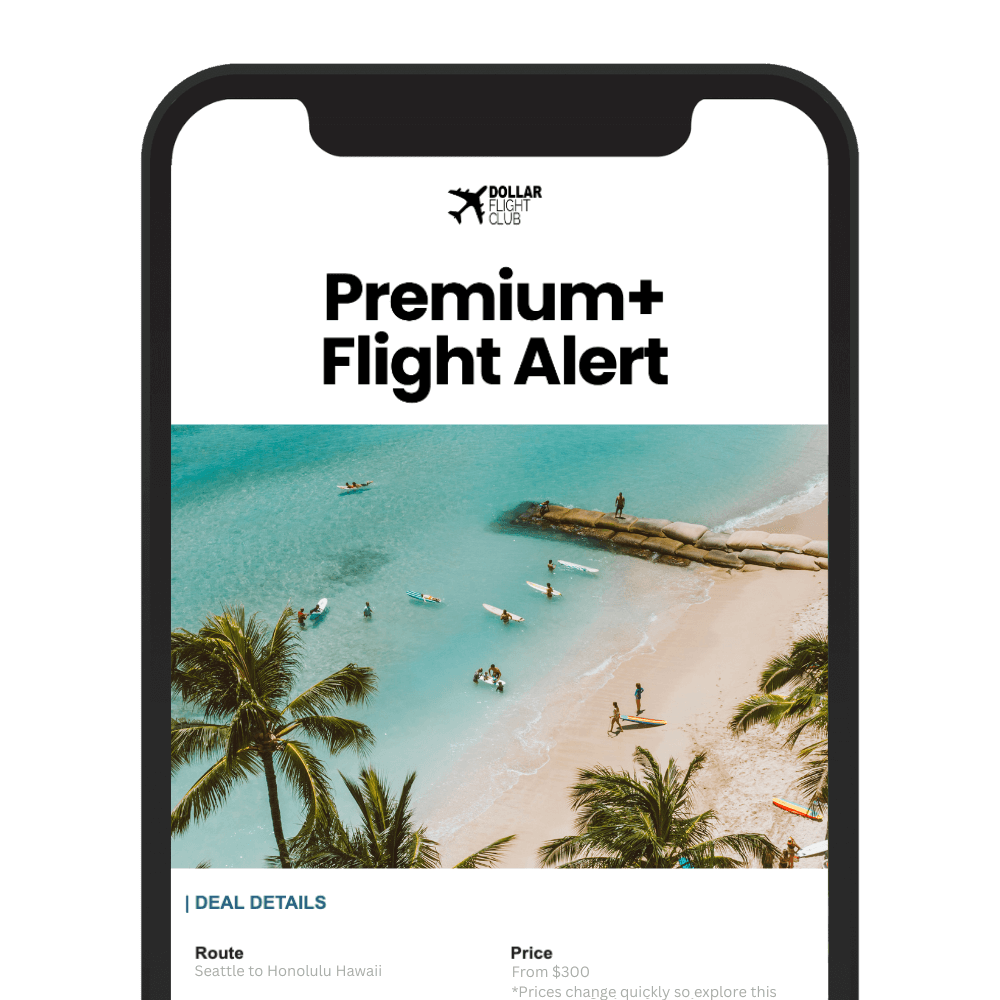
Dollar Flight Club sends email and SMS alerts for discounted domestic and international flights. Its advertised savings of up to 90% apply only to qualifying deals. Premium+ is $99 a year and includes business-class alerts and SMS notifications. Check the site for current pricing and features. Review deals promptly once alerts are active – curated alerts can flag short-lived premium-cabin fares and mistake fares that most travelers never see.
FAQs
How can I tell if a business class fare is a good deal?
Compare the fare with typical business class prices on your route, using price trends as a baseline. Then check the price difference between business and economy. Weigh that extra cost against perks like lounge access, priority services, and more comfort.
Flight deal memberships like Dollar Flight Club can also help you find exclusive premium cabin deals and mistake fares that most travelers rarely see.
Can I get a refund if my lie-flat seat changes?
Refund eligibility depends on your airline’s policy and how you booked. Many airlines don’t guarantee lie-flat seats, though they may offer compensation or rebooking after a major aircraft change. Before booking, check the airline’s contract of carriage.
If U.S. consumer protection rules apply and you book directly with the airline, you may have 24 hours after booking to cancel for a full refund.
Will I earn miles on a discounted business class ticket?
Yes, you’ll typically earn frequent flyer miles on a discounted business class ticket. Promotional fares and deals found through Dollar Flight Club generally qualify under the airline’s loyalty program rules.
How many miles you earn may depend on the fare class or distance flown, but discounted tickets are rarely excluded. If earning status credits matters to you, check the fare class when booking.