Jet lag can ruin your trip by leaving you tired, unfocused, and out of sync with your destination’s time zone. It occurs when your body’s internal clock struggles to adjust after crossing time zones, often taking days to recover. The good news? You can minimize its effects with a few simple strategies:
- Before your flight: Gradually shift your sleep schedule to match your destination’s time zone and use light exposure to reset your body clock.
- During your flight: Stay hydrated, eat meals on your destination’s schedule, and sleep or stay awake based on the local time at your destination.
- After arrival: Get plenty of sunlight, stay active, and avoid long naps. Use melatonin if needed to regulate sleep.

Pre-Flight Preparation
Getting ready for a long trip across time zones? Start prepping your body clock a few days before departure. These pre-flight strategies can make a world of difference, helping you adjust more smoothly during your flight and after you land. By making small changes in advance, you’ll set yourself up for a much easier transition.
Shift Your Sleep Schedule Gradually
Adjusting your sleep and wake times 1–2 days before your flight can help your body sync with your destination’s time zone. The approach depends on your direction of travel:
- Traveling east? Start going to bed and waking up 30–60 minutes earlier each night.
- Heading west? Stay up and wake up 30–60 minutes later each night.
This gradual adjustment gives your internal clock a head start, reducing the shock of a sudden time change. And don’t forget: getting plenty of uninterrupted sleep in the days leading up to your flight is key. Starting your trip well-rested can make all the difference.
Use Light Exposure Strategically
Light exposure is one of the best ways to reset your body clock. Just three days of targeted morning light can shift your circadian rhythm by about 2.1 hours. Here’s how to use it effectively:
- For eastward travel: Seek bright light in the morning – natural sunlight or a light therapy box – and avoid evening light by staying indoors or wearing dark sunglasses.
- For westward travel: Do the opposite. Get bright light in the late afternoon or evening, and limit exposure in the morning.
By managing light exposure, you can adjust to a new time zone about two days faster than if you leave it to chance.
Book Sleep-Friendly Flight Times
The timing of your flight can make or break your adjustment process. For the smoothest transition:
- Flying east? Look for flights that arrive in the afternoon. Morning arrivals might expose you to light at the wrong time, throwing off your internal clock.
- Flying west? Choose flights that land in the late afternoon or evening. This lets you stay awake until local bedtime and use evening light to naturally delay your internal clock.
If you’re traveling for an important event, consider arriving a few days early to give your body more time to adjust.
In-Flight Strategies
What you do during the flight can make a big difference in adjusting to a new time zone. With your watch already set to your destination’s time and pre-flight adjustments in place, it’s time to focus on in-flight habits. The goal? Start living on your destination’s schedule right away – this includes how you eat, sleep, and stay hydrated.
Drink Water Consistently
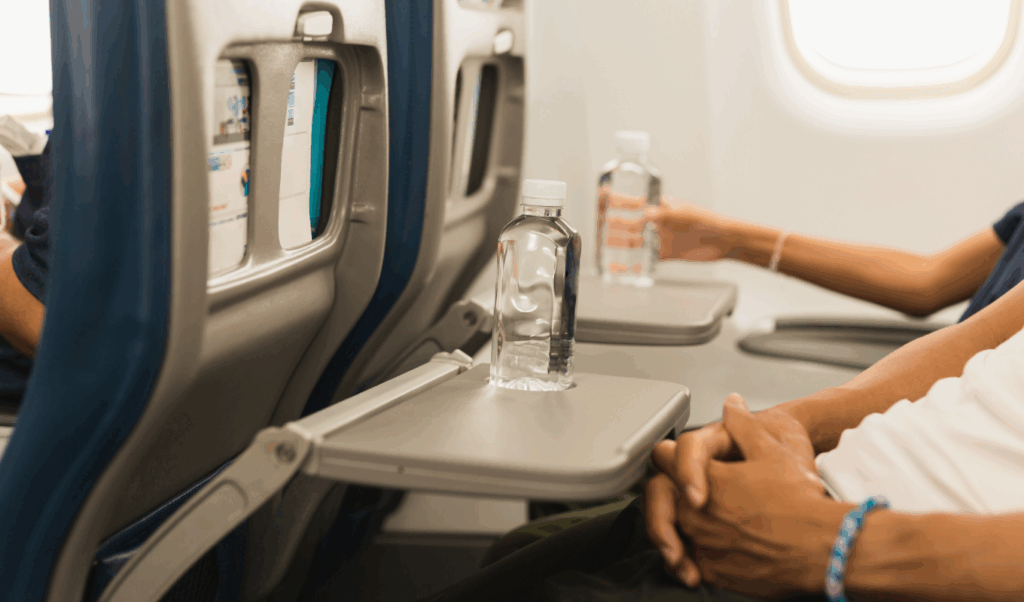
Airplane cabins are notoriously dry and low-pressure, which can leave you dehydrated during long flights. Dehydration often causes symptoms like headaches, fatigue, and general discomfort that many mistake for jet lag. While jet lag is a disruption of your internal clock, staying hydrated helps your body cope with the physical stress of flying, easing your transition after landing.
Keep drinking water throughout your flight. A simple way to stay prepared is to bring an empty reusable water bottle through security and fill it before boarding. Skip alcohol – it dehydrates you and disrupts your sleep. Similarly, avoid caffeine after midday in your destination’s time zone, as it can interfere with sleep and worsen dehydration.
Eat According to Destination Time
Eating on your destination’s schedule is a practical way to help reset your internal clock. This approach can cut jet lag recovery time by up to one-third. For overnight flights, have a light dinner if it’s evening at your destination, then avoid eating until morning. Once you arrive, a hearty breakfast can signal the start of your new day.
Opt for lighter meals with plenty of fruits and vegetables instead of heavy, processed airline food. Small, healthy snacks can also help prevent stomach issues that sometimes come with jet lag. Since your circadian rhythm responds to meal timing as a secondary cue after light exposure, eating at the right times reinforces your body’s adjustment.
Sleep and Move on Schedule
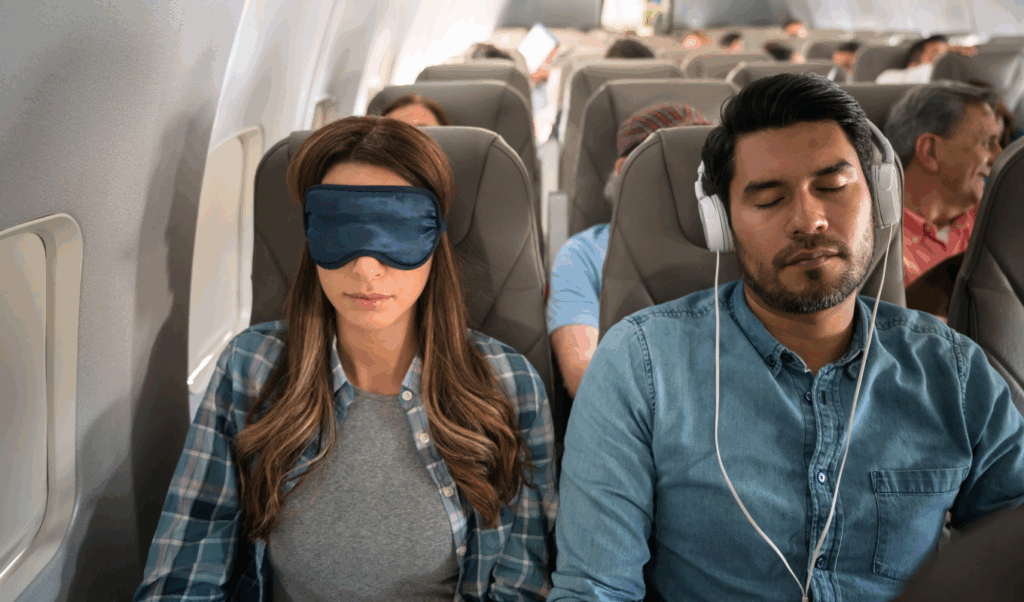
Sleep only if it’s nighttime at your destination. If it’s daytime there, do your best to stay awake. To improve your chances of sleeping on the plane, pack essentials like an eye mask, earplugs, and layers for comfort. If you need a nap, keep it short – no more than 30 minutes – and make sure it’s at least eight hours before your planned bedtime at your destination.
Movement matters too. Get up every few hours to stretch, walk the aisles, or stand for a bit to prevent stiffness and improve circulation. If you’re flying east, be extra mindful of these strategies – 75% of travelers report worse jet lag when heading in that direction.

Post-Arrival Adjustment
The first 24–48 hours after you arrive are key to helping your body adjust to the new time zone. With the right approach, you can speed up this adjustment, shifting your internal clock by two or more hours per day instead of the usual one hour. After all, your body is still synced to your home time, so it’s crucial to send clear signals that it’s time to adapt. These tips build on the groundwork you laid during your pre-flight and in-flight preparations to reduce jet lag.
Get Morning Sunlight
Natural sunlight is your best ally when it comes to resetting your internal clock. Once you land – especially if it’s morning or early afternoon – make it a priority to get outside. Sunlight is far more effective than indoor lighting at signaling to your brain that it’s time to wake up and be active.
If you’ve flown east, morning sunlight is particularly important to help your body adjust to waking earlier. Spend at least 20–30 minutes outdoors to speed up this process. Whenever possible, book flights that arrive during the day so you can take full advantage of this natural reset. For very early arrivals or long-haul flights crossing multiple time zones, wearing sunglasses initially can help prevent your internal clock from shifting in the wrong direction.
Stay Awake and Active
After soaking up some sunlight, focus on staying awake and keeping busy throughout the day. Avoid the temptation to take long naps or go to bed too early. Try to stay awake until at least 9:00 PM or 10:00 PM local time on your first night to help reset your body’s rhythm. If you absolutely need a nap, keep it brief – no more than 30 minutes – and make sure it’s at least eight hours before your intended bedtime.
Eating meals on the local schedule, even if you’re not particularly hungry, can also help. Breakfast, lunch, and dinner act as metabolic cues, reinforcing your new day-night cycle. Light exercise, like a brisk walk or some stretching during daylight hours, can reduce fatigue and support your circadian adjustment. If you’re feeling sluggish, caffeine can be helpful in the morning or early afternoon, but steer clear of it later in the day to avoid disrupting your sleep. As evening approaches, dim the lights and limit screen time to encourage melatonin production and prepare your body for rest.
Supplements for Better Adjustment
Adjusting to a new time zone isn’t always easy, but supplements can help your body adapt alongside strategies like light exposure and sleep scheduling. Using evidence-based approaches – especially melatonin – can cut your jet lag recovery time by as much as 50%.
Use Melatonin for Sleep
Melatonin acts as a signal to help your body sync with your destination’s day-night rhythm. Studies show that travelers who follow specific melatonin protocols are 14 times less likely to suffer from severe jet lag.
For eastward travel, take 1–3 mg of melatonin about 1–3 hours before your destination’s bedtime. If you’re traveling westward, melatonin is typically less critical since staying up later aligns more naturally with your body’s clock. However, if needed, a small dose (0.5–1 mg) taken late in the evening can help.
Opt for fast-release melatonin to ensure your body receives a clear timing signal. Continue using melatonin at your destination’s bedtime for the first 2–3 nights to help your body fully adjust. If you have epilepsy, autoimmune conditions, are pregnant, or take medications like warfarin, consult your doctor before using melatonin.
While melatonin is a key tool, there are other simple ways to support your transition.
Consider Additional Supportive Supplements
Beyond melatonin, a few other strategies can help your body recover and adjust.
- Stay hydrated: Drink plenty of water after your flight to help your body bounce back.
- Choose lighter meals: Opt for smaller portions with a focus on fruits and vegetables to avoid digestive discomfort.
These small steps, combined with strategic supplement use, can make a big difference in how quickly you feel at home in a new time zone.

Conclusion
Preventing jet lag boils down to aligning your internal clock with your destination’s time zone. The process starts before you even take off – gradually adjusting your sleep schedule by 30–60 minutes each day over 3–4 days and using light exposure to signal wake and sleep times can make a big difference.
What you do during the flight also plays a crucial role. Stay hydrated to combat the dehydrating effects of cabin air, and mentally switch to your destination’s time zone as soon as you board. Eat and sleep according to that new schedule to help your body begin the adjustment process.
Once you arrive, your actions can speed up the transition. Expose yourself to bright morning light if you’ve traveled east or late afternoon light if you’ve traveled west – this helps reset your circadian rhythm. Stay active, limit naps to under 30 minutes, and hold off on sleeping until it’s nighttime locally.
Typically, it takes about one day per time zone to fully adjust. However, with proper planning and consistent actions across all phases – pre-flight, in-flight, and post-arrival – you can cut recovery time from 5–7 days down to just 2–4 days. The key is syncing light, food, and sleep cues to work in harmony.
FAQs
How many days before my trip should I start adjusting my sleep?
To ease into your destination’s time zone, try adjusting your sleep schedule 3 to 5 days before your trip. Gradually move your bedtime and wake-up time closer to the schedule of your destination. This simple step can make a big difference in minimizing jet lag once you arrive.
Should I sleep on the plane if it’s daytime at my destination?
Whether you should sleep on the plane depends on your travel plans and how your body copes with jet lag. If you’re heading to a destination that’s several time zones ahead, catching some sleep during the flight might help you adjust more quickly. On the other hand, if it’s daytime at your destination, staying awake could make it easier to sync your internal clock with the local time. Moving around during the flight and soaking up natural light once you land can also ease the transition.
What’s the safest way to use melatonin for jet lag?
To use melatonin effectively for jet lag, stick to a low dose – typically between 1–3 mg – and take it 1–3 hours before your intended bedtime at your destination. Timing is everything here. Taking melatonin too early or too late can actually make your symptoms worse, while getting the timing right can help you adjust more quickly. For optimal results, consider evidence-based guidelines and factor in things like your natural sleep tendencies (your chronotype) and the specifics of your travel plans.