
Flight prices change constantly, but it’s not because airlines are tracking your searches. The real reasons are dynamic pricing algorithms, demand fluctuations, and market competition. Airlines use advanced systems to adjust prices based on seat availability, booking patterns, and how close the flight is to departure. Here’s what you need to know:
- Dynamic Pricing: Airlines divide seats into price tiers. As cheaper seats sell out, prices automatically increase.
- Demand Shifts: Prices rise when demand spikes or seats sell faster than expected.
- Competitor Influence: Airlines monitor each other’s pricing and adjust accordingly.
- Market Factors: Fuel costs, labor shortages, and location-based pricing also play a role.
Key Takeaways:
- Cookies don’t impact prices: Airlines track group trends, not individual behavior.
- Prices can change up to 17 times in 2 days for domestic flights.
- Timing matters: Book 31–45 days ahead for international flights and avoid last-minute spikes.
Compare incognito mode vs. VPNs, compare prices across platforms, and stay flexible with dates to find better deals. Services like Dollar Flight Club can also help by alerting you to price drops and mistake fares.

The Cookie Tracking Myth
There’s a popular belief that airlines use cookies to monitor your flight searches and increase prices when they notice you’re interested. But here’s the truth: this isn’t happening.
What Cookies Actually Do
Cookies are small files that websites use to track your online activity. For airlines, cookies help with things like remembering your preferences, keeping you logged in, or showing you ads later. But when it comes to pricing, cookies serve a different purpose – they track aggregate demand, not individual behavior.
Airlines use cookies to measure how many people are looking at a specific flight or abandoning their bookings before completing them. This information helps them fine-tune their predictive models and understand “spill”, which refers to the gap between available seats and interested passengers. However, this data is about group trends, not personal habits. Price changes are based on market dynamics, not your individual search history.
Why the Cookie Theory Is Wrong
The myth that airlines adjust prices based on your searches sticks around because airfare pricing can feel unpredictable. Research supports this. A 2016 Consumer Reports study tested 372 flight searches, comparing results from incognito and regular browsers. The findings? Prices were the same 88% of the time. In fact, incognito mode only found cheaper flights 7% of the time, while 5% of searches were actually more expensive.
When you see a price jump mid-search, it’s usually because the last seat in a lower fare tier was sold, bumping the price up to the next level. This dynamic pricing system reacts to overall demand and booking trends – not your specific browsing activity. So, when prices rise, it’s not personal. It’s just how the system works.
What Actually Causes Flight Prices to Change
Let’s break down the factors behind those ever-changing flight prices.
How Dynamic Pricing Algorithms Work
Airlines use advanced revenue management systems to tweak ticket prices in real time. These systems rely on demand, seat availability, and competition to determine pricing. Seats are divided into “fare buckets”, or pricing tiers, and as the cheaper buckets sell out, the next, more expensive ones kick in automatically. For instance, Delta Air Lines uses up to 77 fare buckets, while American Airlines and Southwest Airlines use 24 and 28, respectively.
This strategic segmentation also allows airlines to reserve some economy seats for last-minute business travelers who tend to pay higher prices.
In essence, these real-time pricing adjustments are designed to maximize revenue while keeping planes as full as possible.
Demand Shifts and Booking Patterns
Flight prices are anything but stable. Domestic fares can change as many as 17 times over two days, while international flights might see about 12 price shifts in the same timeframe. These changes are driven by algorithms that monitor how quickly seats are being sold compared to historical patterns. If a flight starts selling faster than expected, prices can rise almost instantly.
Demand also fluctuates based on predictable factors, like weekends and holidays, and less predictable events. Airlines often schedule automatic price hikes at key intervals – 21, 14, and 7 days before departure – to capitalize on last-minute purchases.
Competitor Pricing and Market Conditions
Airlines keep a close eye on what their competitors are charging. If one airline lowers its prices, others often follow suit to stay competitive. This creates a ripple effect, where a single price drop can lead to broader market-wide adjustments.
Beyond competition, larger market forces also play a role. For example, the average round-trip ticket in the U.S. rose to $408 in early 2026 – up $100 from 2019. Factors like rising fuel costs, labor shortages, and post-pandemic demand spikes all contribute to these higher prices.
Even where you search from can impact the price. Airlines often adjust fares based on the “point of sale”, meaning the same flight might cost more or less depending on your location. This reflects differences in local purchasing power and living standards. Knowing how these factors interplay and how to use Google Flights can help you time your purchase for the best deal.

How to Find Cheaper Flights
With dynamic pricing in play, these strategies can help you snag lower airfares.
Use Incognito Mode When Searching
Incognito mode can help prevent airlines and booking sites from tracking your search history through cookies. Why does this matter? Airlines often adjust prices based on demand data, and repeated searches for the same route may trigger price increases. By searching in incognito mode, you might avoid this issue. If you’re booking for a group, start by checking prices for a single passenger first – this can help you find the lowest fare tier before adding additional travelers.
Stay Flexible with Dates and Destinations
Being flexible with your travel plans can make a big difference in cost. Midweek flights – especially on Tuesdays or Wednesdays – often come with lower fares. Even flying on holidays like Christmas Day can be cheaper and less crowded. For international flights, booking 31–45 days in advance could save you around $190 compared to booking six months out. Additionally, fares in August are often about 29% lower than those in December. Tools like Google Flights can help you visualize fare trends across a month. Another tip? Consider booking during the latter half of the month to avoid price spikes caused by early-month demand when many people receive their paychecks.
Compare Prices Across Multiple Sites
Airlines frequently adjust prices on busy routes, and fares can vary widely due to the way carriers group seats into different pricing buckets – Delta has up to 77, Southwest 28, and American 24. To find the best deal, compare prices across multiple flight search engines. Travel agencies can sometimes offer exclusive discounts that don’t show up on booking engines or airline websites. Also, check airline websites about 24 hours before departure for potential last-minute discounts. By combining price comparisons with other strategies, you can stay one step ahead of dynamic pricing.
Get Flight Deals Delivered with Dollar Flight Club
Searching for flights manually can feel like a never-ending game of cat and mouse, thanks to constantly changing prices. But there’s an easier way. With Dollar Flight Club, you can let the experts handle the hard part. This service monitors airfare prices 24/7 and sends you alerts when there’s a major price drop, saving you time and money.
How Dollar Flight Club Works
Dollar Flight Club keeps an eye on airline websites, APIs, and fare databases nonstop. When it spots a big price drop, it verifies the deal and sends you an alert via email or SMS. These alerts even include mistake fares – those rare but amazing pricing errors caused by system glitches. Imagine snagging a $1,200 ticket for just $120 because of a currency conversion error. It happens!
You can personalize your alerts by choosing up to four departure airports and setting 10 dream destinations. This way, you only hear about deals that match your travel goals. Each alert provides clear, step-by-step booking instructions, so you can book directly with the airline or through a trusted platform. Timing is everything, though – mistake fares can vanish in hours or even minutes. If you grab one, it’s smart to hold off on booking non-refundable accommodations for at least two weeks to make sure the airline honors your ticket.
This streamlined system makes it easy to stay ahead of the game, and their membership options offer flexibility for all types of travelers.
Membership Plans and Costs
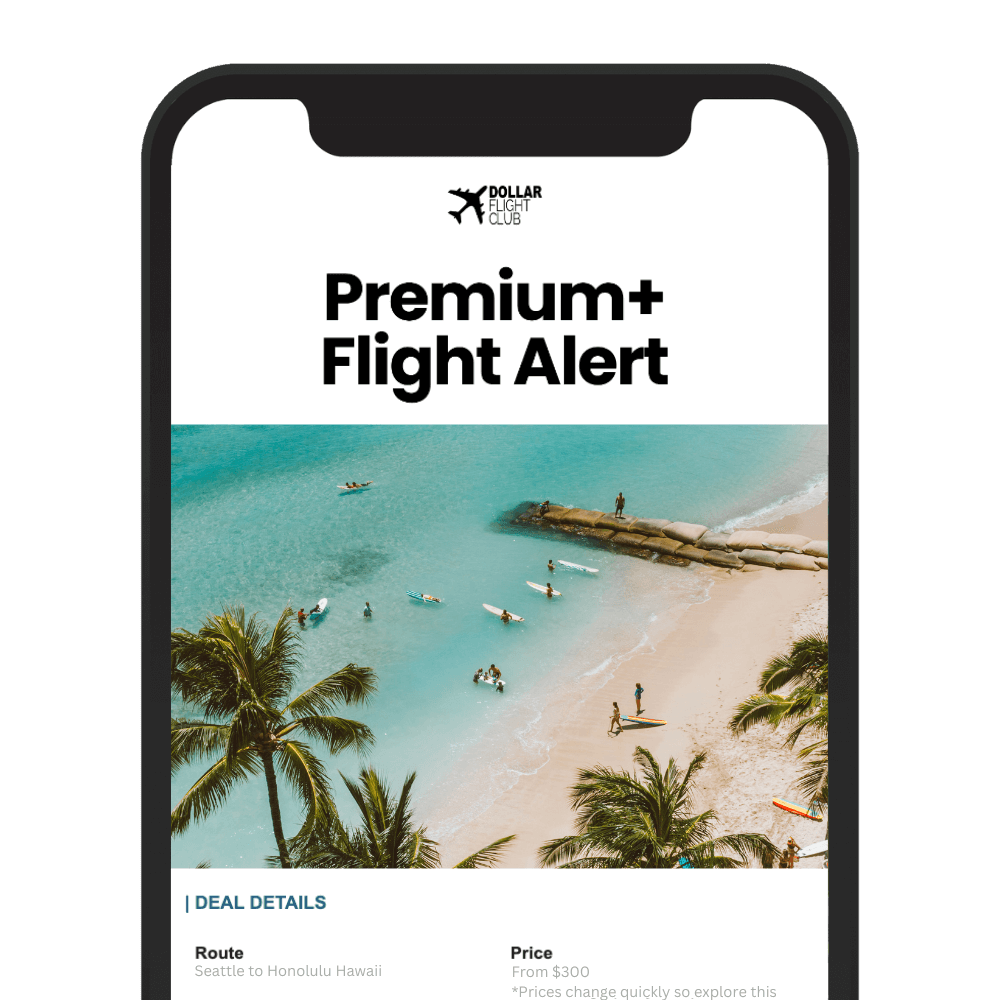
Dollar Flight Club offers three membership tiers to fit different needs and budgets. The Basic plan is free, giving you access to domestic economy deals from one airport with 1–3 weekly alerts. For more features, the Premium plan costs $69 annually and includes international flights, mistake fares, and alerts for up to four departure airports. You can even set 10 dream destinations and receive daily notifications. The top-tier Premium+ plan, at $99 per year, covers everything in Premium but adds business and premium economy deals, SMS alerts for faster updates, and partner perks like discounts on travel-related products.
| Feature | Basic | Premium | Premium+ |
|---|---|---|---|
| Annual Cost | Free | $69 | $99 |
| Flight Types | Domestic Economy | Domestic & International | All Classes (incl. Business) |
| Departure Airports | 1 | 4 | 4 |
| Mistake Fares | No | Yes | Yes |
| Alert Frequency | 1–3 per week | Daily | Daily |
| Notification Method | Email & SMS | ||
| Preferred Destinations | No | 10 | 10 |
Dollar Flight Club’s tiered plans make it easy to find the right fit, whether you’re a casual traveler or someone chasing premium upgrades and exclusive deals.

Conclusion
Despite what many believe, airlines aren’t tracking your searches to hike up prices. The real reason for fluctuating flight costs lies in market dynamics – factors like demand, algorithms, and competitor pricing updates that have nothing to do with your browsing history.
Knowing this can help you focus on strategies that actually work. Using tools like incognito mode, staying flexible with your travel dates, and comparing prices across platforms are proven ways to snag better deals.
If all of that sounds like a hassle, there’s an easier option. Dollar Flight Club does the heavy lifting for you. They track airfare around the clock and send you alerts when prices drop – sometimes by as much as 90% on domestic and international flights. It’s a great way to save both time and money without constantly refreshing flight search pages.
While airline pricing strategies may get more advanced, the basics stay the same: being flexible, shopping around, and timing your purchase wisely can make all the difference. You don’t need to master the complexities of airline pricing – just focus on these simple steps to make smarter travel choices.
FAQs
What makes flight prices jump within minutes?
Flight prices can shift quickly, thanks to airlines’ dynamic pricing systems. These algorithms consider factors like real-time demand, seat availability, and when you book. If demand spikes or seats start selling out, expect prices to climb.
There’s a common belief that searching for flights repeatedly can drive up prices. But in reality, these changes are more likely tied to updates in seat inventory or shifts in demand.
Want to snag the best deals? Keep a close eye on fares or use tools like fare alerts to stay ahead of price changes.
Do airlines charge different prices by location?
Airlines frequently adjust ticket prices based on a passenger’s location. Their pricing systems factor in things like seat availability, demand, competitor pricing, holidays, and how far in advance the booking is made. These dynamic pricing methods are designed to optimize revenue, which means fares for the same route can differ depending on where the ticket is purchased. It’s a common practice in their revenue management strategy to respond to shifting market conditions and demand.
When should I buy to avoid last-minute spikes?
To sidestep those frustrating last-minute price hikes, aim to book your tickets a few weeks ahead of your departure date. For domestic flights, locking in your reservation early often means snagging better deals, as waiting too long can result in higher prices driven by shifting demand. Keeping an eye on fares regularly and staying open to adjusting your travel dates can also boost your chances of finding discounts and steering clear of premium rates as your travel date approaches.