
If I’m booking a summer trip at the last minute, I’d focus on late August, midweek flights, and places where the full trip cost stays low – not just the airfare.
Here’s the short version: early July is the most expensive part of summer, while late August can save about $120 per ticket. I’d also check Tuesday or Wednesday departures, which are often 15% to 25% cheaper than weekend flights, and I’d compare nearby airports since that can cut $100 to $250 off the fare.
This list points to Denver, Chicago, Miami/Fort Lauderdale, Mexico City, Cancún/Riviera Maya, Lisbon, and Montréal because they pair lower flight odds, lighter ground costs, or both. A few stand out right away:
- Chicago has some of the lowest domestic fares, with some roundtrips starting near $55
- Mexico City keeps daily costs low, with Metro rides around $0.30
- Fort Lauderdale can be $100 to $150 less than Miami on the same dates
- Montréal gives me an international option that can still stay under $400 roundtrip
- Lisbon is the outlier: the flight is high, but day-to-day spending can be lower than in many Western Europe city trips
I’d also move fast when a fare drops, check hotel prices before booking the flight, and avoid looking at the ticket price by itself. A cheap flight to a high-cost city can still turn into an expensive trip.
Quick Comparison
| Destination | Typical Roundtrip Airfare | Est. Daily Budget | Best Trip Length |
|---|---|---|---|
| Denver, CO | $150–$300 | $100–$150 | 3–4 days |
| Chicago, IL | Under $90 | $100–$160 | 3–4 days |
| Miami/Fort Lauderdale, FL | Under $150 | $120–$200 | 3–5 days |
| Mexico City, MX | $232–$420 | $40–$70 | 4–6 days |
| Cancún/Riviera Maya, MX | Under $400 | $80–$120 | 5–7 days |
| Lisbon, Portugal | $700-$900 | $70–$160 | 7+ days |
| Montréal, Canada | Under $400 | $90–$140 | 3–5 days |
Bottom line: if I want the lowest airfare, I’d look at Chicago. If I care more about low daily spending, I’d lean toward Mexico City. If I want an easy international trip without Europe-level flight prices, I’d check Montréal or Mexico first.

How to Find Last-Minute Flight Deals for July and August
Early July is usually the most expensive part of the summer travel season. That’s when holiday trips and school breaks push demand up fast.
Late August tends to be the sweet spot for lower fares. As schools go back into session, demand drops, and travelers can often save about $120 per ticket compared with the pricier parts of summer.
Departure day matters too. Tuesday and Wednesday flights are often 15% to 25% cheaper than weekend departures, which tend to carry a premium during mid-summer. If your dates are flexible, that one small shift can make a big dent in the total cost.
Another smart move is to check nearby airports. Flying out of or into a secondary airport can cut $100 to $250 per ticket. It’s not always glamorous, and it may add a bit of ground travel, but the savings can be hard to ignore.
Fare alerts help because airline prices can change multiple times a day. So when you see a drop, don’t sit on it too long.
| Timing Window | Pricing Trend | Demand Level |
|---|---|---|
| Early July | Peak pricing, the highest of summer | Very high – holidays and school breaks |
| Mid-summer weekends | 15%–25% premium over midweek | High – leisure travelers |
| Late August | Lowest of summer, saving about $120 per ticket | Low – schools back in session |
When a fare drops, booking speed matters more than perfect timing.

How to Act Fast When a Fare Drops
Once a fare drops, you need to move fast. Airfares can change several times in a single day based on demand, and there are fewer seats available in July and August. When travel demand is high, those lower-priced seats can vanish in a hurry.
That said, booking fast only helps if you’re ready to book. Keep your payment details handy, along with passport information for international trips. It also helps to have some flexibility with your dates. And don’t look at airfare in isolation. Check hotel availability and the total trip cost too.
Main cabin fares often make more sense than basic economy because they usually let you make changes if the price drops again. The 24-hour cancellation window gives you a small safety net as well. That kind of speed matters even more for destinations where airfare and hotel prices can disappear at the same time.

1. Denver, Colorado
Denver is a smart last-minute summer pick because Denver International is a major hub with frequent domestic service. That usually means more late-booking seat options than you’ll find at smaller airports. On top of that, hotels, food, and local transit often cost less here than in coastal summer hotspots.
For travelers who want a cheap flight and a simple plan, Denver makes life easier. The city’s high elevation helps keep summer temperatures milder than in many U.S. cities. And after you book the flight, the rest of the trip tends to stay easier on your wallet because lodging and casual dining usually aren’t the pricey part.
There’s also plenty to do without building a complicated itinerary. Denver gives you easy access to Rocky Mountain National Park, Red Rocks, and downtown outdoor dining. That mix of cooler weather and open-air activities makes the city easy to book on short notice, especially since frequent domestic service leaves more same-week options available.

2. Chicago, Illinois
Chicago is a smart pick for short-notice trips because its heavy flight traffic helps keep fares in check. It’s one of the busiest airline hubs in the U.S., and carriers are often trying to fill seats on high-capacity routes. That steady volume helps keep prices lower and more stable than in smaller markets.
You can find roundtrip fares starting around $55, and fares under $90 are common on hub routes. If you’re checking airport options, Midway (MDW) often comes in cheaper than O’Hare (ORD) for domestic flights.
The savings don’t stop at the airport either. Chicago ranks among the most affordable domestic destinations for summer 2026, which means the city itself can be a good deal too.
And once you arrive, it’s easy to build a trip without much prep. You can spend time along the lakefront, walk through Millennium Park, or set aside a day for museums. That’s what makes Chicago such a solid late-summer backup: flights are often affordable, and the city gives you plenty to do without needing a tight plan.
3. Miami and Fort Lauderdale, Florida
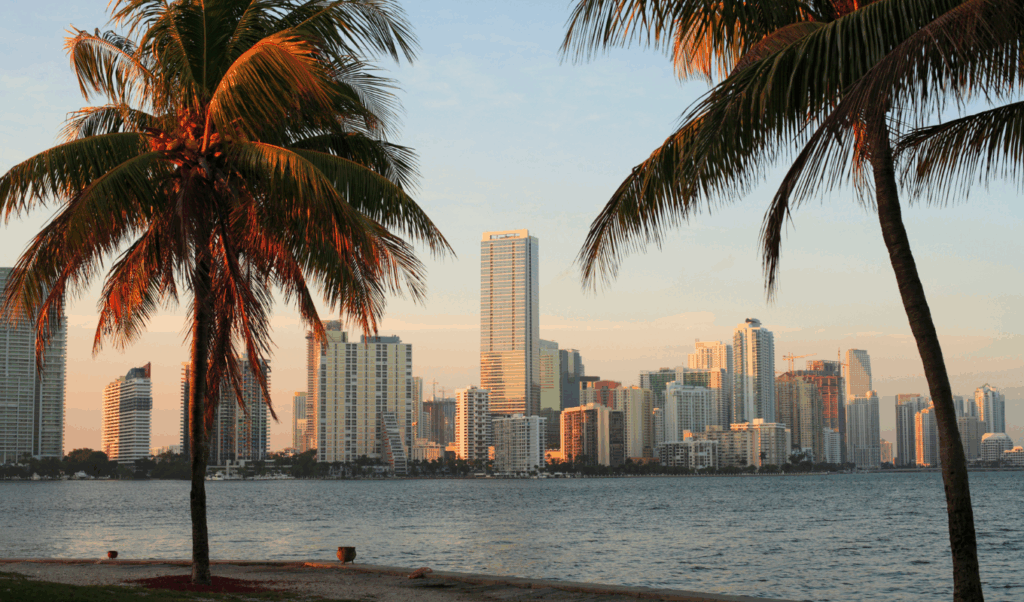
Florida is a smart pick for a last-minute summer trip for one simple reason: competition helps keep prices in check. With two major airports serving the same area, airlines have to compete. And because Florida has a packed flight schedule, it’s often easier to find seats even when you’re booking the same week.
The biggest way to save money is to look at Fort Lauderdale (FLL) before Miami (MIA). Summer 2026 roundtrip fares from FLL usually land between $58 and $197, while MIA is often $100–$150 more on the exact same dates. That’s a pretty big gap. The airports are only about 45 minutes apart by car, so the drive can easily be worth it. In this case, the airport you pick can matter just as much as the place you’re visiting.
You can trim costs even more by changing your travel days. Tuesday and Wednesday departures tend to be cheaper, and moving a Sunday return to Tuesday can save a family of four about $400.
If you want to keep spending low once you arrive, there are plenty of easy options:
- Public beaches
- Neighborhood walking tours
- Transit-based sightseeing
Late August is often cheaper for both flights and hotels. Since August sits in hurricane season, trip insurance is a smart add-on.

4. Mexico City, Mexico
Mexico City is a strong choice for a last-minute trip. Roundtrip economy flights from major U.S. hubs usually land between $232 and $420, and July hotel rates are often 20% to 30% lower than peak season.
Part of the appeal is simple: shorter flights from the U.S. tend to cost less. On top of that, budget airlines like Volaris and Viva Aerobus help keep fares in check, even when you book close to departure. So if you’re planning late, this is still a trip that can fit the budget.
Once you arrive, costs stay low day to day. Metro rides are about $0.30, street tacos run around $1.26, and budget travelers can often get by on $25 to $60 per day.
The weather helps too. At 7,350 feet above sea level, Mexico City stays fairly mild in July, with daytime highs around 77°F to 80°F. Rain often shows up in the afternoon, usually from 2 p.m. to 5 p.m., so it makes sense to do outdoor spots like Chapultepec Park or Teotihuacan in the morning. Then later, when the showers roll in, you can shift to indoor stops like the National Museum of Anthropology.
For a short trip, that morning-first plan makes the city much easier to handle.
5. Cancún and Riviera Maya, Mexico
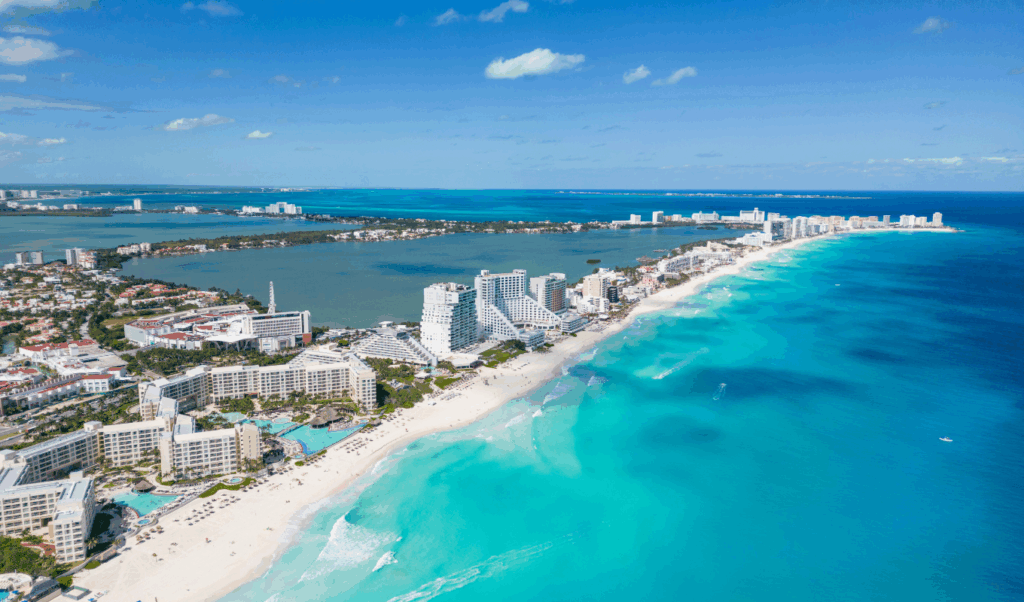
If you want beach time instead of Mexico City, Cancún and the Riviera Maya are one of the cheaper Mexico picks for a last-minute trip.
They’re also pretty easy to book on short notice. Short U.S.-Mexico routes and heavy airline competition help keep fares down, and roundtrip flights often stay under $400 in summer.
The lowest prices usually show up in late August, especially during the weeks of Aug. 17 and Aug. 24. One reason is hurricane season, which runs from June through November and can weaken demand. That can help on price, but it also means storm risk is part of the deal, so trip insurance is a smart move.
You can also keep costs in check once you’re there. Lower-cost ways to spend your time include:
- Beach days
- Cenote visits
- Day trips to Isla Mujeres or Tulum
After Mexico’s beach option, the list moves to another lower-cost late-summer destination.

6. Lisbon, Portugal
If you’re open to a longer flight in exchange for lower day-to-day costs, Lisbon makes a lot of sense. It’s one of the better-value capital cities in Western Europe. July flights from the U.S. can sting, but fares in late August often fall by about 20%. And once you land, daily spending is far easier to manage than in many other cities nearby.
Late August roundtrip airfare from the U.S. often lands in the $700-$900 range. Mid-range hotels average about $240 per night, while budget travelers can often get by on $50–$75 per day. Mid-range travelers usually spend $100–$160 per day.
If airfare is the sticking point, Porto is the main workaround. Flying into Porto can cut $500 or more off the flight, and getting from Porto to Lisbon usually costs $30–$80.
Once your flight is booked, Lisbon itself is pretty easy to get around. Alfama and Chiado are best seen on foot, which is part of the city’s charm. The main catch is the heat. A lot of older apartments in Alfama don’t have AC, so it’s smart to check before you book.
Planning a day trip to Sintra for spots like Pena Palace? Go right at opening time. Show up mid-morning, and lines can stretch to 2 to 3 hours.

7. Montréal, Canada
Montréal gives you an international trip that feels easy. It’s closer than Europe, cheaper to reach, and doesn’t demand weeks of planning.
That price gap is hard to ignore. In summer 2026, transatlantic flights are running $1,700–$2,100 roundtrip, while Montréal is still showing fares under $400 roundtrip from major U.S. cities. Shorter flights to Canada help keep prices lower than long-haul Europe routes.
The timing also works in Montréal’s favor. Late July and August are a sweet spot if you want a break from the worst summer heat, since the city tends to be cooler than most U.S. cities. For a quick getaway, that matters more than people think. A trip feels a lot better when you’re not sweating through every afternoon.
Once you’re there, day-to-day costs stay pretty reasonable. Budget hotels, Metro rides, and casual cafés make it possible to keep spending in check without feeling like you’re cutting every corner. And for a short trip, Montréal has plenty to fill your time. Old Montréal, Mount Royal, and the Old Port give you that mix of city streets, views, and easy sightseeing that works well over a long weekend.
There’s also one smart booking move here: choose main cabin instead of basic economy when fares are this low. That gives you more room to rebook if a better fare pops up before departure.
For a quick side-by-side look at fare range, daily cost, and timing, use the table below.
Quick Comparison Table
This table gives you a fast way to stack up destinations by airfare, hotel cost, and what you’ll likely spend per day. It’s also handy when you need to act fast after a fare drop.
| Destination | Typical Roundtrip Airfare (USD) | Avg. Nightly Lodging (USD) | Est. Daily Budget (USD) | Best For |
|---|---|---|---|---|
| Denver, CO | $150 – $300 | $150 – $250 | $100 – $150 | 3–4 Days |
| Chicago, IL | Under $90 | $180 – $280 | $100 – $160 | 3–4 Days |
| Miami/Fort Lauderdale, FL | Under $150 | $150 – $300 | $120 – $200 | 3–5 Days |
| Mexico City, MX | $232 – $420 | $70 – $150 | $40 – $70 | 4–6 Days |
| Cancún, MX | Under $400 | $150 – $350 | $80 – $120 | 5–7 Days |
| Lisbon, Portugal | $700-$900 | $240 (avg.) | $70 – $160 | 7+ Days |
| Montréal, Canada | Under $400 | $160 – $260 | $90 – $140 | 3–5 Days |
A few patterns jump out fast. Chicago is the cheapest on airfare. Mexico City is the lowest once you’re there day to day. Lisbon makes more sense for a trip of at least a week, since the flight cost is so high.
That’s the main idea: the cheapest trip isn’t always the one with the lowest ticket price. It’s the one that balances flight cost with what you’ll spend on the ground. And yes, your departure airport can change the math by $100 or more. That happens a lot on routes like Fort Lauderdale vs. Miami.
Once you’ve picked the best match, it’s time to cut the rest of the trip cost.

How to Estimate and Cut Costs for a Last-Minute Trip
After you pick a destination, the next step is simple: figure out the total trip cost. And that means looking past the plane ticket. The real price of a trip is almost never just the flight.
A fast way to estimate the full cost is to add up airfare, lodging, local transit, and $30–$60 per day for meals and activities. That gives you a solid working number before you book anything.
If you don’t have a valid passport, international travel is off the table for now. In that case, it’s smarter to focus on domestic routes and U.S. territories.
If you do have a passport, some short-haul international trips can come in cheaper than a domestic getaway. Mexico and Canada are good examples, especially when hotel prices in U.S. cities are high. For Europe, flying in late August or September often brings lower airfare.
Once your destination is locked in, it gets easier to trim costs on the ground. One of the simplest moves is to book lodging near a central transit hub instead of right next to major tourist spots. That can cut your local transportation spending quite a bit.
A few extra fees can also sneak up on you, so make sure to pay attention to:
- Baggage fees
- Resort fees
- Airport transfer costs
- The final checkout total
After your budget is set, fare alerts can help you grab the airfare before the price shifts again.

Using Dollar Flight Club to Catch Late-Summer Deals
For travelers who are tired of checking fares by hand, Dollar Flight Club can help spot the kinds of price drops covered earlier in this guide. It sends email and SMS alerts when fares dip below their usual range, so it’s easier to jump on a deal at the right time.
The service tracks both domestic and international routes, including the destinations mentioned in this guide. You can also set alerts for secondary airports, which may surface lower fares for the same trip.
The tiers below show what each plan includes.
| Plan | Price | Best For |
|---|---|---|
| Basic | Free | Domestic flights, economy class, 1 departure airport, 1–3 weekly deals |
| Premium | $69/year | Domestic and international flights, 4 departure airports, mistake fares |
| Premium+ | $99/year | All Premium features plus SMS alerts, business class alerts, partner perks |
SMS alerts can be especially helpful if you need to move fast when a fare hits your budget.
FAQs
Which destination is cheapest overall?
Based on current travel data, Florida destinations are the cheapest overall for American travelers. Roundtrip flights to Orlando and Fort Lauderdale often cost less than $150, and some fares drop as low as $55 to $82.
If you’re looking at day-to-day spending, Bacalar, Mexico, stands out. Hostel dorm beds start at $10 per night, and meals can cost as little as $1 to $3.
How late can a summer trip be booked?
Last-minute summer travel is still on the table, if you’ve got some flexibility.
Most travelers book domestic trips 1 to 3 months ahead and international trips 2 to 8 months ahead. But summer changes the game. During peak season, those windows often stretch to 3 to 5 months for domestic travel and 4 to 10 months for international travel.
That doesn’t mean you’re out of luck. It just means you need to play it a bit smarter.
For a better shot at finding a deal, stay flexible with your travel dates, look at midweek flights, and set up automated fare alerts so you can track price changes as they happen.
Is a cheap flight worth it if hotels are expensive?
Only if the total trip cost still fits the budget. A cheap flight can stop looking like a good deal fast if the hotel costs too much.
Before booking, travelers should compare flight and hotel prices and estimate day-to-day costs for food, lodging, and transportation.