

Booking flights for a family can be expensive, but with the right strategies, you can save hundreds of dollars. Here are the key takeaways:
- Book Smart: Airlines charge more for group bookings if cheaper seats aren’t available for all passengers. Search for tickets individually to find the lowest price, then book in smaller groups and link reservations with the airline.
- Timing Matters: For domestic flights, book 1–3 months ahead. For international trips, plan 2–8 months in advance. Traveling midweek, especially on Wednesdays, can save about 13%.
- Use Tools: Set up fare alerts on platforms like Google Flights or services like Dollar Flight Club to track price drops. Always compare nearby airports for better deals.
- Avoid Fees: Pack smart to reduce baggage costs. Many airlines let you check car seats and strollers for free. Skip seat selection fees by waiting for free assignments during check-in.
- Be Flexible: Adjust travel dates or consider connecting flights and alternate airports for better prices. Off-peak travel months (like January–May or September–November) often have cheaper fares.
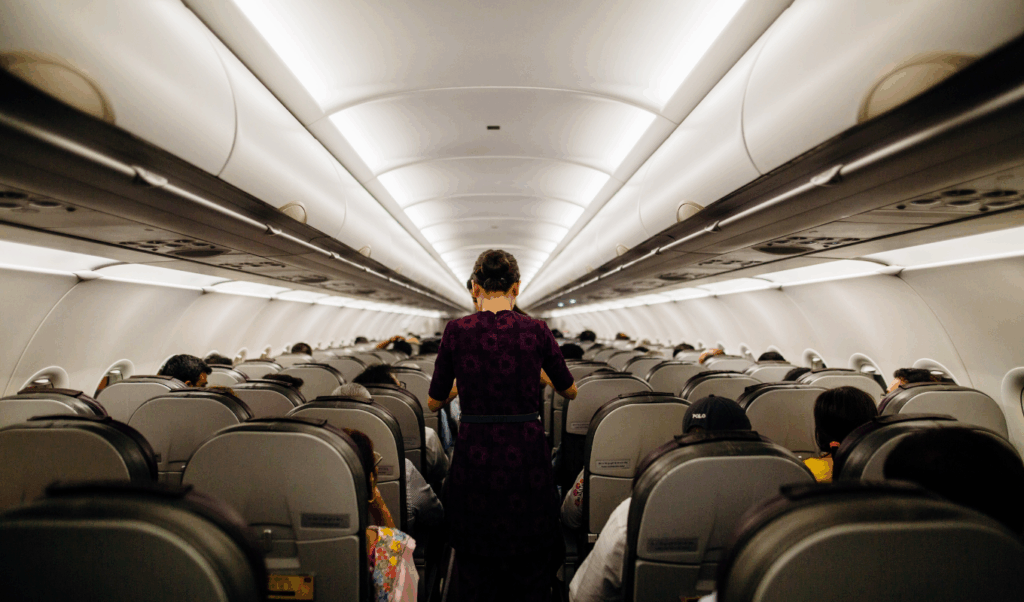
How Airlines Price Multiple Tickets
Airlines divide their economy cabins into around 10 different pricing categories, often referred to as “fare buckets”. Each bucket has a limited number of seats, and when you search for multiple tickets at once, the airline’s booking system ensures that everyone in the group pays the same price.
Here’s how it works: if you’re looking for four seats but only three are available in the cheapest bucket, the system automatically bumps the entire group to the next, more expensive bucket. Airlines won’t split your group across different price levels – it’s all or nothing. This setup often results in higher per-person costs when booking for multiple passengers.
Why Multiple Seats Cost More
Booking several seats at once can trigger higher prices. A 2017 study examined 16 flights and found that searching for multiple passengers led to higher per-person costs 56% of the time compared to booking for just one traveler.
For instance, on an American Airlines flight from New York to Los Angeles, booking six seats ended up costing $103 more per person than booking a single seat. Similarly, a family booking multiple seats on a Southwest Airlines flight from Washington, D.C., to Orlando faced a $94 per-person increase.
Splitting Bookings to Save Money
You can often save money by booking tickets individually or in smaller groups. Start by searching for a single passenger to identify the lowest available price. Then, gradually increase the number of passengers in your search until you notice a price jump. This will show you how many seats are left in the cheaper fare bucket.
For example, a family of four flying Southwest from Baltimore to Aruba might see a price of $245 when searching for one ticket. But searching for four tickets together bumps the price to $275 per person. By booking one seat at $245 and the other three at $275, the family saves $30 overall, paying $1,070 instead of $1,100.
Once you’ve booked separate reservations, call the airline’s customer service to link the confirmation numbers. This ensures your group stays together if the airline needs to rebook due to delays or cancellations. However, avoid booking children under 12 on their own reservation, as they may be flagged as unaccompanied minors, potentially incurring extra fees. To avoid this, pair at least one adult with children in each booking.
Keep in mind that splitting bookings has some drawbacks. Elite status perks – like free checked bags or priority boarding – may not apply to family members on separate confirmation numbers unless the reservations are linked. Additionally, seat assignments can become more complicated, especially with airlines that charge extra for seat selection. While splitting bookings can lower the base fare, it’s important to consider these potential trade-offs when planning your trip.

When to Book Flights for Families
Timing is everything when it comes to booking family flights. Airlines constantly tweak prices based on demand, and knowing when to book can help families save hundreds of dollars.
Best Booking Windows for Family Travel
The best time to book depends on whether you’re traveling domestically or internationally, as well as the time of year. For off-peak domestic flights, aim to book 1–3 months in advance (34–86 days). For international trips, plan to book 2–8 months ahead, with 3–5 months being the sweet spot. If you’re traveling during peak times like summer, holidays, or spring break, adjust those timelines: book domestic flights 2–5 months in advance and international flights 4–10 months ahead. For holiday-specific travel, snag the best deals by booking Thanksgiving flights 35 days before departure and Christmas flights 51 days ahead.
Aside from timing your booking, the day you choose to fly can also make a big difference in costs.
Cheapest Days to Fly
The day of the week you travel can significantly impact ticket prices. Flying midweek, especially on a Wednesday, can cut ticket costs by about 13%, saving families an average of $56 per ticket on domestic flights.
As for booking, the old belief that Tuesday is the best day to find deals no longer applies. Airlines now use advanced pricing algorithms that adjust fares throughout the week, meaning deals can pop up any day. Instead, stick to the recommended booking windows and use flexible date search tools to compare prices over an entire month. Opting for early morning flights can also save money and help avoid delays.
How Flexibility Reduces Flight Costs
Flexibility can be a game-changer when it comes to saving money on flights. By being open to adjusting your travel plans – whether it’s shifting dates, trying different airports, or considering alternate routes – you can tap into savings that a rigid itinerary might miss.
Using Flexible Date Search Tools
Tweaking your travel dates by just a few days can lead to significant savings. Traveling during off-peak times, like late January to early May or September to early November, can slash costs by as much as 25% compared to peak season fares. Many flight search tools let you view prices for an entire month, making it easier to pinpoint the cheapest dates. Instead of locking in specific days, scan a range of options to find the most budget-friendly window. This strategy is particularly effective if your schedule has some wiggle room. And this same mindset applies to exploring different departure points.
Flying from Nearby Airports
Looking at alternate airports can reveal cheaper flights and better schedules. Using an “All Airports” filter (like searching “NYC” instead of a specific airport) allows you to compare fares across multiple nearby hubs. For instance, families traveling to Orlando might find more affordable options flying into Orlando Sanford International (SFB) rather than Orlando International (MCO). Similarly, in London, comparing Heathrow (LHR) with Gatwick (LGW), Stansted, or Luton could help you snag a better deal.
Don’t forget to check airlines like Southwest, which don’t appear on major comparison sites – you’ll need to visit their website directly. Also, consider arrival times carefully. A flight landing at 1:00 AM might seem cheaper at first but could lead to higher transportation costs if public transit isn’t running. And keep in mind that some secondary airports may tack on extra fees for checked baggage, so factor that into your decision.
Connecting Flights vs. Nonstop Flights
Nonstop flights are ideal for avoiding delays and making travel less stressful, but connecting flights can sometimes be the smarter choice. For example, if a nonstop flight departs at 6:00 AM, a connecting flight leaving mid-morning might better align with your child’s sleep schedule. Similarly, a connection from a closer secondary airport – like Oakland instead of San Francisco – might be more convenient than a nonstop from a distant major hub.
For long-haul trips (over 15 hours), a layover can even be a blessing in disguise, giving toddlers a chance to stretch their legs or play in airport play areas.
This idea of a “sanity premium” – paying extra to avoid the hassle of connections – can be worth it, but not always. Sometimes, choosing a connecting flight on a family-friendly airline may help you avoid hidden fees that budget carriers often charge. Nonstop flights mean fewer headaches with boarding, luggage, and managing strollers or car seats, but connections can offer flexibility and savings that make them worth considering. These strategies, when combined with other cost-saving tools, can help families make the most of their travel budget.

Tools and Alerts for Finding Flight Deals
Trying to manually track flight prices can feel like chasing the wind. With dynamic pricing causing fares to change constantly, it’s nearly impossible to keep up. That’s where automated fare alerts come in. These tools work tirelessly in the background, monitoring your chosen routes and notifying you the moment a great deal pops up. Pairing these tools with smart booking strategies can make a world of difference.
Setting Up Fare Alerts
Fare alerts are your best friend when it comes to spotting price drops or snagging rare error fares (temporary pricing mistakes that usually disappear within 24–48 hours). Timing is everything with these deals, so act fast when you see one. To stay ahead, enable SMS alerts – they often arrive faster than emails, giving you an edge on time-sensitive offers.
Expand your search by setting alerts for multiple nearby airports. For instance, if you’re in the New York City area, track flights from JFK, EWR, and LGA. This increases your chances of finding a steal. Also, use flexible date ranges (like ±3 days) to uncover cheaper midweek flights, which can save your family hundreds of dollars. Tools like Google Flights’ Price Graph and KAYAK’s Price Forecast are invaluable here. They show historical pricing trends, helping you decide whether to book now or wait for prices to drop further.
Once you find a deal that looks promising, book it immediately. Thanks to U.S. regulations, you can cancel for a full refund within 24 hours of booking, as long as your flight is at least seven days away. This gives you a risk-free window to lock in the price.
Using Dollar Flight Club for Family Deals
If you’re looking for a more tailored approach to finding family-friendly flight deals, services like Dollar Flight Club can save you a lot of time and money.
Dollar Flight Club specializes in sending curated email and SMS alerts for deeply discounted flights – sometimes up to 90% off – from your home airport. Instead of spending hours searching manually, Dollar Flight Club does the legwork for you, monitoring thousands of routes and delivering the best deals directly to your inbox. This aligns perfectly with money expert Clark Howard’s “deal-first” philosophy:
Dollar Flight Club offers several membership options to fit different needs:
- Free Basic Plan: Get 1–3 domestic deals per week from one airport.
- Premium Plan ($69/year): Access daily domestic and international deals from up to four airports, including error fares.
- Premium+ Plan ($99/year): Adds SMS alerts, premium/business class deals, and partner perks.
On average, members save about $500 per ticket. This service is especially helpful for families with flexible schedules, as it allows you to plan trips around school breaks while taking advantage of deep discounts. By keeping an eye on your preferred departure airports, Dollar Flight Club can help you uncover affordable family vacations you might not have even considered.

Avoiding Extra Fees and Seat Selection Issues
Traveling as a family can get pricey fast, especially with the rise in baggage and change fees over the years. These added costs can sneak up on you, but with some smart planning, you can avoid unnecessary charges and keep your travel budget intact.
Reducing Baggage Costs
When you buy a seat for your child, they’re entitled to the same baggage allowance as adults – one carry-on and one personal item. To make the most of this, share items across bags to maximize space. Plus, most airlines let you check car seats and strollers for free, which can be a big help.
Packing smart is key. Wear bulky clothes on the plane to save space in your luggage, and consider using a car seat cover when checking a car seat – it’s a handy way to stash lightweight extras like diapers or towels. Keep a thin, foldable duffel bag in your suitcase so you can redistribute items if a bag goes over the 50-pound limit. Overweight fees can be steep, sometimes reaching $200 per bag. Prepaying for checked bags online can also save you money. For instance, American Airlines and United both offer a $5 discount if you pay during online check-in. If you travel often, an airline-branded credit card might be worth it – many include free checked bags for the cardholder and their travel companions on the same reservation.
| Airline | First Checked Bag Fee | Overweight Fee (51–70 lbs) |
|---|---|---|
| American Airlines | $35 (online) / $40 (airport) | $100 (over 53 lbs: $30) |
| Delta Air Lines | $35 | $100 |
| United Airlines | $35 (prepaid) / $40 (standard) | $100 |
| JetBlue | $35 (off-peak) / $40 (peak) | $150 |
Seating Arrangements for Families
For families with young children, seating together is a top priority. Thankfully, many U.S. airlines guarantee free adjacent seating for kids 12 and under, even on Basic Economy tickets. Airlines like United use dynamic seat maps to group families, while American Airlines searches for family seating before departure. Booking everyone under a single confirmation code is crucial – airline systems are designed to keep passengers on the same reservation seated together.
To improve your chances of sitting together, check in exactly 24 hours before your flight. Airlines often release “preferred” seats reserved for elite members at that time, making them available to everyone. If you still find your family scattered across the cabin, arrive at the gate at least an hour early and ask the gate agent for help. Gate agents and flight attendants typically prioritize seating young kids with at least one adult for safety reasons. To save even more, skip the seat selection fees at booking and wait for free seat assignments during check-in or at the gate. These fees can range anywhere from $10 to over $130 per person, each way, which adds up quickly for a family.
Avoiding Hidden Fees
Basic Economy fares often come with the most restrictions. For example, United’s Basic Economy doesn’t allow carry-ons and usually charges extra for any seat selection. Before booking, tools like the KAYAK Fee Assistant can help you understand how those extra fees might impact your total cost.
You can also cut costs by bringing your own snacks and an empty water bottle to refill after security – onboard food and drinks are often overpriced. If you’re booking kids on separate reservations to save money, call the airline to link the bookings. This helps you avoid unaccompanied minor fees, which can be an unpleasant surprise.
Paying attention to small details like these can make all the difference between a trip that’s easy on your wallet and one that’s unexpectedly expensive.

Conclusion
Booking budget-friendly family flights doesn’t have to be a daunting task. The key lies in timing your purchase smartly, staying flexible with your travel plans, and leveraging tools that simplify the process. For domestic flights, booking 1–3 months in advance can yield better prices, while international trips often require planning 2–8 months ahead. Choosing to fly midweek instead of weekends can cut costs significantly, and considering nearby airports or connecting flights instead of nonstop options can lead to even more savings.
To streamline your efforts, automated tools can be a game-changer. For example, Dollar Flight Club takes the hassle out of hunting for deals by sending you alerts when fares drop – sometimes by as much as 90%. This is particularly helpful for busy families who need to save both time and money.
One more practical tip: remember the $30 Rule. For economy tickets, aim to pay no more than $30 per flight hour. For instance, a three-hour flight should ideally cost $90 or less per person. This straightforward rule can help you decide quickly if a fare is worth booking or if you should keep searching.
FAQs
Can booking flights individually help families save money?
Yes, booking flights one at a time can often help families save money compared to purchasing all tickets together. When you search for multiple passengers, airlines might automatically bump you into higher-priced fare categories or limit your options to a single carrier. This could mean missing out on cheaper fares. By booking tickets individually, you can snag the lowest prices available for adults, children, or infants, and even mix and match airlines or routes to find the best overall deal.
This method also allows you to take advantage of special promotions or discounts that might only apply to single-ticket purchases. For instance, you could book adult tickets with one airline and find a discounted child fare on another. Price-tracking alerts can also be a game-changer, helping you spot single-ticket deals as they appear. With this approach, you could end up saving hundreds of dollars on your family’s total travel costs.
How can I avoid baggage fees when flying with kids?
When traveling with kids, avoiding baggage fees starts with smart packing. Make sure each family member’s bag meets the airline’s size limits for free carry-ons or personal items. A clever tip is to pack essentials in your child’s under-seat personal item, maximizing the free allowance for every ticketed passenger. Slim, under-seat luggage is a perfect choice for this.
To pack efficiently, consider creating a capsule wardrobe with mix-and-match clothing. Swap out liquid toiletries for solid versions and weigh your bags at home to ensure they comply with weight restrictions. If you do need to check a bag, look into credit cards that offer a complimentary first checked bag – many airline cards extend this benefit to companions on the same reservation. Another trick? Check your bags at the gate instead of the ticket counter; this can sometimes help you dodge extra fees. With a little planning and strategic packing, you can keep baggage costs in check while traveling with your family.
Why is being flexible important when booking family flights?
Flexibility can be a game-changer when it comes to saving money on family flights. Airfare often fluctuates based on travel dates, times, and even the airports you choose. For instance, simply shifting your departure by a day or booking a midweek flight – like on a Tuesday or Wednesday – could slash ticket prices by as much as 20%. For a family of four, those savings can quickly add up to hundreds of dollars. Similarly, exploring flights from nearby airports or considering alternate routes can uncover cheaper options that you might miss if you stick to a single-city search.
It also helps to steer clear of peak travel times like holidays, weekends, or school breaks, as these tend to drive up costs. Instead, aim for off-peak periods or shoulder seasons. Not only are ticket prices generally lower during these times, but you might also save on extras like baggage fees or seat selection. Combining flexible dates with a willingness to consider alternate airports can also increase your chances of finding flash sales or mistake fares – both of which can make a big difference for families booking multiple tickets.
To stay ahead of the game, set up price alerts. These notifications let you know when fares drop, giving you the chance to grab the best deals before they disappear. The more flexible you are with your travel plans, the more you can stretch your family’s travel budget.