
If I want the lowest fares in 2026, I’d target January to early February or September to October. Those are the two clearest low-price windows for U.S. travelers, while June and July are usually the most expensive.
Here’s the short version:
- Cheapest times to fly: January–early February and September–October
- Backup low-fare window: Late August
- Most expensive time: June–July
- Holiday warning: Prices often jump from 12/10 to 1/10 and again around Thanksgiving week
- Domestic booking window: usually 3 to 8 weeks ahead
- International booking window: usually 2 to 6 months ahead
- Simple way to cut costs: fly midweek, shift dates by 2–3 days, and check nearby airports or use Google Flights to track price trends
The price gaps can be big. A domestic trip that costs about $450 near 12/20–12/24 may drop to around $360 in mid-January. A Europe roundtrip that sits near $650 in July can fall to about $430–$480 in fall. For a family of four, that can mean $500 to $700+ back in your budget.
Here’s the main pattern I see:
| Time of year | What usually happens |
|---|---|
| Winter (Jan–Feb) | Lowest fares after the holiday rush |
| Spring (Mar–May) | Mixed pricing; spring break can push fares up fast |
| Summer (Jun–Jul) | Highest fares and fewer cheap seats |
| Fall (Sep–Oct) | Steady low fares on many domestic and Europe routes |
Bottom line: if my dates are flexible, I’d skip peak summer and major holidays, book in the usual window for my trip type, and watch for fare drops as soon as winter or fall dates open up.

Flight prices by season: where the biggest savings are
Flight prices don’t move in a straight line through the year. They rise and fall with school calendars, holidays, weather, and demand. That’s why the same route can cost hundreds more in one month than another.
Here’s the big picture:
| Season | Fare Level | Domestic roundtrip range | International roundtrip range | Best-value destinations | Biggest Risk |
|---|---|---|---|---|---|
| Winter (Jan–Feb) | Lowest | $300–$382 | ~$1,040 | Transatlantic, major U.S. cities, Desert Southwest | Dec. 10–Jan. 10 holiday spike |
| Spring (Mar–May) | Moderate | $250–$350 | ~$1,180 | Western Europe, Mexico, U.S. national parks | Spring break/Easter (20–50% spike) |
| Summer (Jun–Jul) | Highest | $424–$499 | $1,224–$1,724 | Late August domestic and transatlantic routes | July 4, school breaks, seat shortages |
| Fall (Sep–Oct) | Best value | $211–$399 | $738–$1,024 | Europe, U.S. city trips, Mexico | Thanksgiving week |
Winter: January and early February usually have the lowest fares
January and early February are often the cheapest stretch of the year, especially for transatlantic trips. Fares regularly drop to $109–$179 one-way and $450–$700 roundtrip from major East Coast hubs. That’s often 40–50% lower than those same routes in July.
Within the U.S., winter savings tend to show up on Florida routes once the holiday rush passes, Desert Southwest spots like Phoenix and Las Vegas, and major city pairs. The catch is simple: the holiday window changes everything. From about December 10 through January 10, fares run much higher. So the best winter deals usually start only after that wave of demand fades.
Spring and summer: uneven value in spring, peak prices in June and July, and better deals in late August
Spring can be a mixed bag. In late February and early March – roughly Feb. 22 to Mar. 8 – many routes still act like shoulder season. Domestic leisure flights and transatlantic fares can stay close to winter levels.
Then prices jump. Mid-March through early April, which lines up with spring break and Easter travel, pushes fares sharply higher for Florida beaches, the Caribbean, Mexico, Hawaii, and popular city pairs. On some routes, prices can climb enough to match early summer averages.
By late April and May, prices calm down again on many routes. U.S.–Europe roundtrips in that period often run about $300–$400 less than mid-July travel.
Summer is much more direct: expect the highest prices in June and July. Domestic roundtrips average $424–$499, while international leisure routes – especially Europe and Asia – often reach $1,224–$1,724 or more. Compared with fall shoulder pricing, that can mean paying $300–$400 extra per ticket for the same international trip.
Late August is where things start to loosen up. As back-to-school dates get closer, demand eases on family-heavy routes like Orlando, the Florida Gulf Coast, Southern California, and Las Vegas. Transatlantic fares also start to slide. Travelers who move a trip from late June or early July to the last two weeks of August can often save 15–25% on the same routes.
Fall: September and October offer the most reliable low fares
If you want the steadiest shot at low fares, fall is hard to beat. September alone brings about 19% savings on domestic flights compared with November, when holiday travel starts to shape pricing. On U.S.–Europe routes, fall shoulder-season fares in 2026 run about 22% below summer peaks, with roundtrips that cost $1,000+ in July often dropping into the $650–$800 range in September and October.
Domestic flights show the same pattern. A roundtrip that averages $400–$450 in July can fall to $300–$350 in early fall on many common routes. Europe trips, domestic city breaks, and some beach destinations in Mexico all tend to price well in this window.
The one big exception is Thanksgiving week. That period can push domestic fares back up near summer levels on major family routes. Outside that one holiday spike, fall stays one of the most steady low-fare periods for U.S. travelers.
Those seasonal windows matter even more when you match them with the right booking timing and expert tips for finding cheap flights.

How to use seasonal pricing to book lower fares
Knowing the cheapest season is a great start. But that alone won’t get you the lowest fare. Timing still matters. Once you’ve picked the cheaper season, the next move is to book in the right window and stay a little flexible with your dates and airports.
Booking windows by season and trip type
For domestic trips, the sweet spot is usually 3 to 8 weeks before departure, with an average best booking window of about 42 days. If you’re flying in June or July, start watching fares 3 to 4 months ahead and aim to book 60 to 90 days before departure.
International trips usually take more planning. For shoulder-season routes, fares often work best 2 to 4 months out. For peak summer trips, that window usually stretches to 4 to 6 months. Europe routes tend to price best at around 99 days in advance, while Caribbean and Mexico trips can still work closer to 60 to 75 days out.
| Season | Domestic booking window | International booking window |
|---|---|---|
| Winter (Jan–early Feb) | 4–8 weeks out | 2–4 months out |
| Spring (late Feb–May) | 6–10 weeks out, earlier for spring break | 2–4 months out |
| Summer (Jun–Jul) | 2–3 months out | 4–6 months out |
| Fall (Sep–Oct) | 4–8 weeks out | 2–4 months out |
How date and airport flexibility can lower your total price
A small date change can make a big difference. Midweek departures are usually cheaper than weekend flights, and Wednesday is often the cheapest day to fly domestically. Sunday tends to be the most expensive. Even shifting your trip by two or three days within the same low season can cut the fare without changing the trip in any major way.
Dates help, but airport choice can matter even more. Flying from a nearby airport, like Burbank instead of LAX, can cut fares by $50 to $200 or more. It’s smart to check nearby airports on both ends of the trip, not just where you depart. You can easily compare these options by using Google Flights to track multiple airports at once.
A good example showed up in Spring 2026. Travelers who used Newark (EWR) as a gateway to San Juan found fares as low as $116. That’s about 60% below the usual $320 average for that route.

Using Dollar Flight Club to catch seasonal price drops
Seasonal pricing tells you when to watch. Alerts help you book before the lowest fares disappear.
How Dollar Flight Club fits into seasonal fare planning
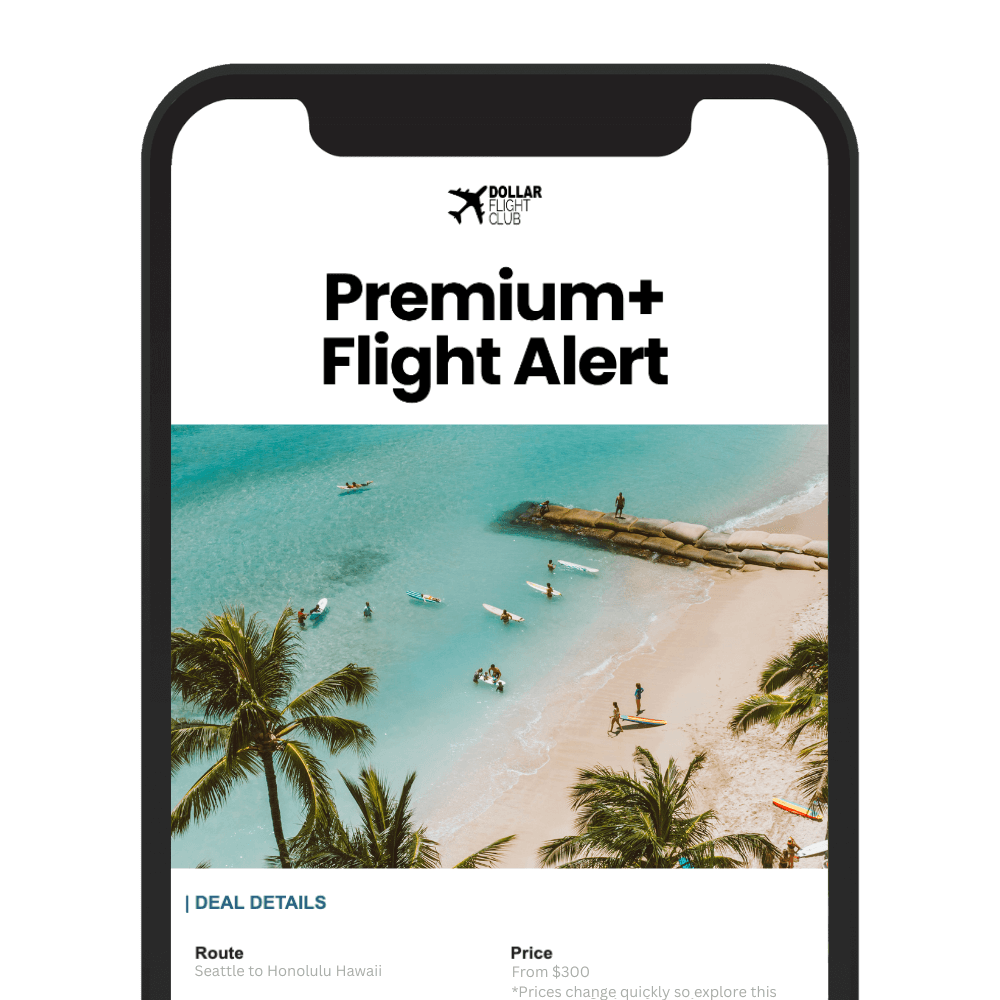
Dollar Flight Club sends email and SMS alerts when fares drop from your chosen departure airports, so you can jump on a deal before prices climb again. Those low-fare windows can close fast. An alert gives you a shot to book while the price is still there.
Members also get access to exclusive flight deals, travel perks, and discounts from top travel brands, with savings of up to 90% off on both domestic and international destinations.
Plan options for occasional and frequent travelers
Pick a plan based on how often you travel and whether you want domestic-only or domestic-plus-international alerts. The main idea is simple: choose the option that fits your trip habits and how to find cheap flights and how fast you want to respond.
| Plan | Annual Cost | Best For | Key Seasonal Benefit |
|---|---|---|---|
| Basic | Free | Occasional domestic travelers | Email alerts for major domestic price drops |
| Premium | $69/year | Frequent travelers | Domestic and international alerts from up to 4 departure airports |
| Premium+ | $99/year | Deal hunters and frequent flyers | SMS alerts for fast action on brief fare drops |
The free Basic plan makes sense for occasional domestic trips, including winter low-fare windows. Premium adds domestic and international alerts, plus support for up to four departure airports, which is a good fit for fall Europe deals. Premium+ adds SMS alerts for short-lived fare drops when timing matters most.
Use alerts to move on the low-fare windows above, especially when fares drop without warning.

Conclusion: The best times to fly for the lowest fares in 2026
For U.S. travelers, the cheapest fares in 2026 usually show up in January through early February and September through October. That’s the sweet spot for lower prices. In those periods, winter and fall fares average about $382 to $399 for domestic flights and $1,024 to $1,040 for international trips. If those windows do not work for you, late August is a solid backup. On the flip side, June and July tend to be the priciest months, and holiday travel can run 30% to 60% above average.
Knowing the cheapest season is only half the job. You also need to book at the right time. For domestic trips, aim for 3 to 8 weeks ahead. For international travel, the better window is 2 to 8 months ahead. After that, you can trim the fare more by picking midweek travel dates and checking flexible airport options.
If you do not want to track fares yourself, alerts can handle that part. Dollar Flight Club sends email and SMS alerts for discounted flights, with deals up to 90% off on domestic and international routes, so you have a better shot at grabbing seasonal price drops before they vanish.
FAQs
How far ahead should I book holiday flights?
For the best holiday fares, book 4 to 8 months ahead, especially for peak periods like Christmas and New Year’s.
Thanksgiving works a bit differently. The sweet spot is usually 24 to 59 days before departure.
That timing can make a big difference. Booking as early as August or September can save up to 25% compared with waiting. And once you get within three weeks of your trip, prices often jump.
That’s where Dollar Flight Club’s fare alerts can help. They make it easier to spot price drops before fares climb.
Are early morning flights usually cheaper?
Yes, early morning flights are often cheaper. Airlines often price these first departures lower because fewer people want to fly that early, especially compared with midday or afternoon flights.
There’s another plus, too: early flights can lower your odds of delays. Since the plane usually starts the day on schedule, there’s less chance of it being held up by problems that build later on.
Which nearby airports are worth checking?
Check nearby airports in big metro areas, especially secondary hubs. They often have lower fares than the main international airport.
But don’t look at the ticket price alone. Compare those savings against the cost, time, and hassle of getting to and from the airport.
A cheaper flight can stop being cheap once you add:
- Gas, tolls, or parking
- Train, bus, or rideshare costs
- Extra travel time before and after your flight
Looking at fares across nearby airports gives you a better shot at finding the lowest price for your route.